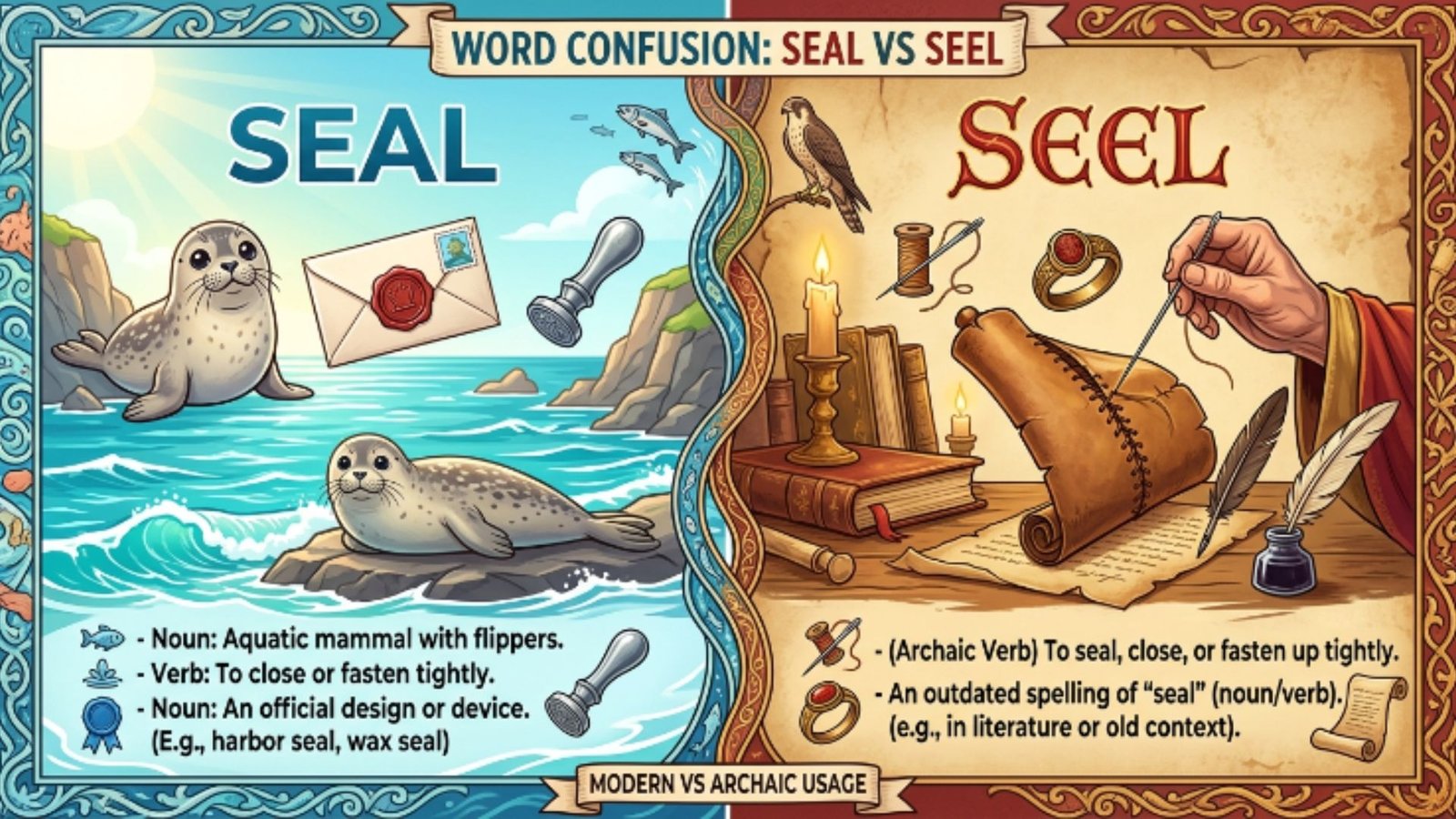
Have you ever paused while writing because you weren’t sure whether to use seal or seel? You’re not alone. These words can easily cause confusion, especially when you’re typing fast or trying to avoid a spelling mistake. The good news is that the correct spelling for modern English is usually seal. It can mean to close something securely, add an official mark, or finalize an agreement. You’ll find it in everyday language, business communication, legal writing, and even when talking about the animal that lives in the sea.
But what about seel? It isn’t simply a random misspelling. It’s an old, obsolete word with a specialized historical use, mainly connected with falconry. So, unless you’re reading an old text or discussing this unusual meaning, seal is the word you want. Understanding this small difference can make your writing clearer and help you choose the correct spelling with confidence.
Quick Answer
When choosing between seal vs seel, use seal in normal modern writing. It is the correct spelling for the common word meaning to close, secure, mark, or finalize something.
Seel isn’t simply a random spelling mistake. It is an obsolete word that appeared in older English and had a specialized historical meaning. Today, most readers won’t expect to see it in everyday writing.
If you’re writing an email, contract, school assignment, or social media post, choose seal. It works naturally in both American English and British English.
Simple rule:
- ✅ Seal → standard spelling in Modern English
- ⚠️ Seel → obsolete historical word
- ❌ Seel → incorrect when you mean the modern word seal
Think of it this way: if you want to close an envelope or package, seal is the word you need.
Examples:
- ✅ “Please seal the envelope before mailing it.”
- ❌ “Please seel the envelope before mailing it.”
- ✅ “The company sealed the agreement yesterday.”
- ✅ “Make sure the container is sealed properly.”
Conversation example:
Alex: “Should I write ‘seel the package’?”
Mia: “No. Use seal. That’s the standard spelling.”
The Origin of Seal (and Why Seel Exists)
The modern word seal has a long history. Its development connects with Latin sigillum, which referred to a small mark or sign used for identification or authentication.
Historically, people used seals to show authenticity, authority, and security. A wax seal, for example, could close an envelope while showing that nobody had opened it.
The word later developed several modern meanings. Today, you can seal a container, seal an envelope, or seal the deal. As a noun, a seal can also mean an official mark/stamp.
Seel followed a different historical path. It appeared in older English as a specialized verb. Its historical use doesn’t make it the correct spelling for ordinary modern situations.
Why does “seel” exist?
The confusion comes partly from pronunciation. Seel and seal sound alike, making them homophones in modern pronunciation.
Historically, seel referred to closing the eyes of a hawk in falconry. You may encounter this obsolete word in older books or historical writing.
- Seel → historical falconry term
- Seal → common modern English word
- Seal → used as a verb and noun today
- Seel → rarely encountered outside historical contexts
Example:
“The falconer used the old practice described as ‘seeling’ the bird’s eyes.”
That meaning has little connection with everyday uses such as sealing an envelope, contract, or package/container.
British English vs American English Spelling
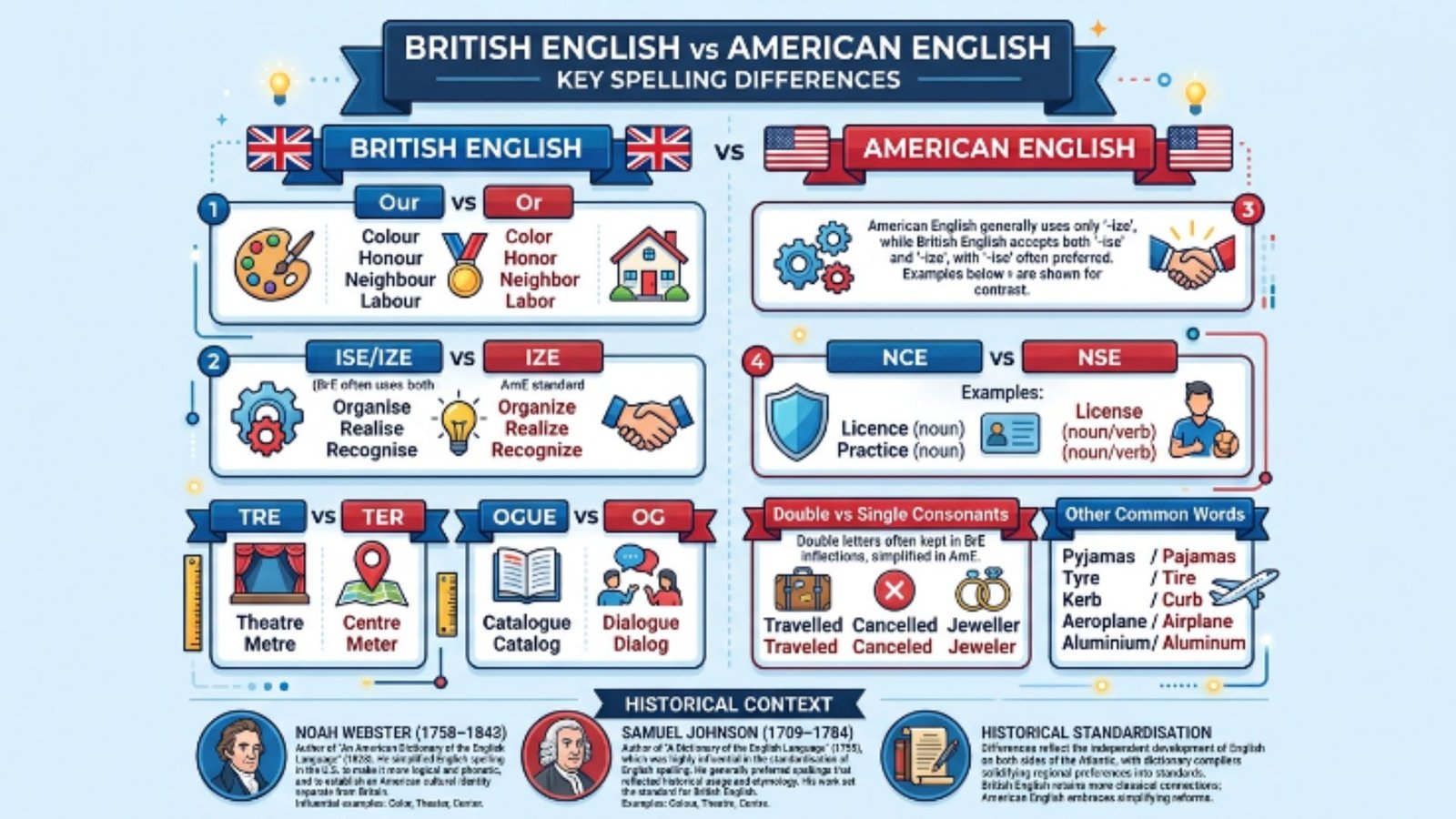
There is no major regional spelling difference here. Seal has the same spelling in American English, British English, and Commonwealth English.
Some English words change across regions. For example, American English often uses “theater,” while British English commonly uses “theatre.” Seal doesn’t follow that pattern.
| Feature | American English | British English |
| Correct spelling | Seal | Seal |
| Verb | Seal | Seal |
| Noun | Seal | Seal |
| Past tense | Sealed | Sealed |
| Continuous form | Sealing | Sealing |
The same rule generally applies across Commonwealth English as well. You don’t need to change seal based on your audience.
Conversation example:
Sam: “I’m writing this contract for a UK client. Should I use ‘seel’?”
Jordan: “No. Seal works in both British and American English.”
So, if you’re checking seash.
Which Spelling Should You Use?
For almost every modern situation, choose seal. It is the standard spelling you’ll want in professional, academic, and casual communication.
You can use seal when talking about closing something physically. You can also use it when describing official approval or finalizing an agreement.
For example, you might seal an envelope, seal a package, or seal a contract. A company might also place an official seal on a certificate or court document.
Audience guidance:
- Business communication: Use seal
- Legal writing: Use seal
- Academic writing: Use seal
- Office communication: Use seal
- News writing: Use seal
- Social media: Use seal
- Daily language: Use seal
The word also works naturally in phrases such as seal the deal and seal of approval.
Conversation example:
Manager: “Please check whether the document is sealed.”
Employee: “It’s sealed properly and ready to send.”
Unless you’re discussing historical English or falconry, seel will usually look like a spelling mistake.
Common Mistakes with Seel or Seal
The most common problem involves pronunciation confusion. Because seal and seel sound alike, people sometimes spell the word according to how it sounds.
That can create an obvious spelling error in professional writing. Imagine sending a client an email saying, “Please seel the contract.” The meaning remains understandable, but the spelling looks wrong.
Remember that English contains many confusing word pairs. Similar sound doesn’t always mean similar spelling.
Frequent mistakes:
- ❌ “Please seel the envelope.”
- ✅ “Please seal the envelope.”
- ❌ “The package wasn’t seel properly.”
- ✅ “The package wasn’t sealed properly.”
- ❌ “The company will seel the agreement.”
- ✅ “The company will seal the agreement.”
- ❌ “The certificate has an official seel.”
- ✅ “The certificate has an official seal.”
Quick memory trick:
Think of seal as something that closes or secures. You can seal an envelope, secure a container, or seal the deal.
When seal vs seel comes up in everyday writing, seal is almost always the word you want.
Corrections:
Correcting seal vs seel becomes easy once you understand the meaning. In Modern English, seal is the standard choice for closing, securing, marking, or finalizing something.
Seel has an older, specialized history. It isn’t the spelling you should use when writing about an envelope, package, contract, or official document.
Here are common corrections:
- ❌ “Please seel the envelope.”
- ✅ “Please seal the envelope.”
- ❌ “The box wasn’t seel properly.”
- ✅ “The box wasn’t sealed properly.”
- ❌ “They will seel the agreement.”
- ✅ “They will seal the agreement.”
- ❌ “The certificate has an official seel.”
- ✅ “The certificate has an official seal.”
Conversation example:
Emma: “I wrote ‘seel the package.’ Is that right?”
Noah: “Use seal instead. ‘Seel’ is an obsolete word.”
Seel or Seal in Everyday Examples
Everyday writing gives you plenty of chances to use seal correctly. The word appears in messages, workplace conversations, documents, and casual posts.
If you’re deciding between seal vs seel, consider what you’re trying to describe. If something needs closing, securing, or official marking, seal almost certainly fits.
You might use it for an envelope, package/container, food container, document, or agreement.
The word also appears as a noun. For instance, a gold seal can appear on a certificate to represent quality or approval.
Quick examples:
- Seal the envelope before mailing it.
- Keep the container sealed.
- The contract is ready to seal.
- The certificate carries an official seal.
- The package arrived with its seal intact.
In emails
Professional emails often use seal when discussing documents, packages, or agreements.
A simple spelling mistake can make a polished email look careless. That’s why choosing the correct spelling matters in business communication.
Examples:
- “Please seal the envelope before sending it.”
- “Make sure the package is sealed properly.”
- “We can seal the agreement today.”
Conversation example:
Manager: “Can you seal the documents?”
Assistant: “Sure. I’ll send them afterward.”
In office communication
Office communication frequently involves contracts, certificates, envelopes, and packages. All these situations can call for seal.
You may also hear the word when coworkers discuss finishing an agreement. In that context, seal means to finalize something.
- “Please seal the envelope.”
- “The package needs to be sealed properly.”
- “We finally sealed the agreement.”
- “The certificate has the company’s official seal.”
Conversation example:
Sara: “Is the contract ready?”
Mike: “Yes. We just need to seal the deal.”
Legal writing
Legal writing gives seal a particularly formal role. A court document may carry an official seal that identifies authority or authenticity.
The word can also describe finalizing an agreement. However, legal documents often use precise language, so context matters.
Examples:
- “The court document bears an official seal.”
- “The certificate carries the court’s seal.”
- “Both parties signed and sealed the agreement.”
- “The document was placed under seal.”
Here, seal works as both a noun and a verb.
Conversation example:
Lawyer: “Does the certificate have the official seal?”
Clerk: “Yes. It’s attached to the document.”
News writing
News writing uses seal when reporters describe authorities closing places or officials finalizing agreements.
For example, authorities might seal a building after an inspection. A report might also mention an official seal on a government document.
- “Officials sealed the building after the inspection.”
- “The court document carried an official seal.”
- “The two sides sealed the agreement Friday.”
- “Police placed the office under seal.”
News writing favors clear, familiar words. Seal fits naturally because readers understand it immediately.
Conversation example:
Reporter: “What happened at the site?”
Editor: “Officials sealed the building after the inspection.”
On social media
Social media uses seal in both literal and playful ways. People may talk about sealing food, closing packages, or finishing a deal.
The phrase seal the deal also works well in captions and short posts. It gives a sentence a confident, conversational feel.
Examples:
- “Coffee packed and sealed ☕”
- “One final step to seal the deal.”
- “Keep your snacks sealed properly.”
- “That smile just sealed the deal.”
Conversation example:
Friend 1: “Did you finally choose the outfit?”
Friend 2: “Yep. That jacket sealed the deal.”
Seel or Seal – Google Trends & Usage Insight
Search interest around seal vs seel mainly comes from spelling confusion. People often search both forms because they sound alike.
Google Trends can help show relative search interest over time. However, search interest doesn’t decide whether a spelling is grammatically correct.
The important distinction comes from actual English usage. Seal remains a common word in Modern English. Seel, by contrast, appears mainly in historical or specialized contexts.
That difference matters when you’re writing for today’s readers.
Search confusion often happens because:
- The words sound alike.
- People spell unfamiliar words phonetically.
- English contains many irregular spelling patterns.
- Older words sometimes survive in dictionaries.
- Readers may encounter seel in historical texts.
So, when seal vs seel appears in a spelling search, choose based on context. For normal writing, seal is the safe and standard choice.
Seal vs Seel – Comparison Table
The easiest way to understand seal vs seel is to compare their meanings and modern usage side by side.
| Feature | Seal | Seel |
| Modern English | Yes | Rare/obsolete |
| Correct everyday spelling | Yes | No |
| Common verb | Yes | No |
| Common noun | Yes | No |
| Historical usage | Yes | Yes |
| Main modern meaning | Close, secure, mark, finalize | Historical specialized meaning |
| Past tense | Sealed | Seel had historical forms |
| Present participle | Sealing | Seeling in historical usage |
| Business communication | Common | Avoid |
| Legal writing | Common | Avoid |
| Academic writing | Common | Usually avoid |
| Social media | Common | Rare |
Example:
“Please seal the package.”
That’s standard Modern English.
By contrast, seel belongs mainly to historical language. Unless you’re discussing its historical meaning, using it can create a spelling mistake.
Strong Usage Guide
A strong usage rule makes seal vs seel much easier to remember. Use seal when you mean to close, secure, mark, or finalize something.
The word works across everyday and formal situations. You can seal an envelope, seal a container, seal a contract, or place an official seal on a certificate.
Remember these common uses:
- Seal an envelope.
- Seal a package.
- Seal a container.
- Seal an agreement.
- Add an official seal to a document.
- Seal the deal after negotiations.
The meaning changes slightly with context. The spelling doesn’t.
Correct meanings of “seal”
The word seal has several common meanings. It can describe an action, a physical mark, or even an animal.
In writing, context usually makes the intended meaning obvious.
1. As a verb
As a verb, seal means to close something securely. It can also mean to protect an opening, confirm something officially, or finalize an agreement.
Examples:
- “Please seal the envelope.”
- “The worker sealed the container.”
- “They sealed the contract.”
- “Use tape to seal the package.”
Common synonyms include close, secure, lock, and fasten.
The figurative meaning appears in expressions such as seal the deal. There, the word means to finalize an agreement or decision.
Conversation example:
Liam: “Are we finished negotiating?”
Maya: “Yes. We’ve sealed the deal.”
2. As a noun
As a noun, seal can mean an official mark or stamp. Organizations, courts, schools, and governments may use one to show authority or authenticity.
For example, a certificate might display a gold seal. A court document may carry an official seal.
The noun also refers to a physical closure. A bottle, package, or container can have a seal that protects its contents.
And there’s another familiar meaning: a seal is also a marine animal.
Examples:
- “The certificate has a gold seal.”
- “The document bears the official seal.”
- “The container’s seal remains intact.”
- “We saw a seal near the shore.”
Seal in Professional, Legal, and Daily Language
Seal fits comfortably across formal and casual English. Its meaning shifts with context, yet the spelling remains unchanged.
In professional settings, it often relates to agreements, documents, packaging, or approval. In everyday speech, it usually describes closing or securing something.
Whether you’re writing an email or a legal document, seal remains the standard form.
Seal in business English
Business English frequently uses seal when discussing agreements and final decisions.
The familiar phrase seal the deal means to finalize an agreement. Companies also use seal literally when discussing packages, documents, and containers.
Examples:
- “Both companies sealed the deal.”
- “Please seal the package.”
- “The contract was sealed after negotiations.”
- “The documents need an official seal.”
Conversation example:
Director: “Did they accept the terms?”
Manager: “Yes. We’ve sealed the deal.”
The Seal in legal terms
Legal language often uses seal to identify authority, authenticity, or formal status.
A court document may contain an official seal. A certificate might also display a seal from the issuing organization.
You may encounter phrases such as:
- Official seal
- Under seal
- Seal of the court
- Seal of approval
- Sealed document
The exact legal meaning can vary by jurisdiction. Still, seal remains the standard spelling.
In daily life
Daily language gives you the simplest examples of seal. You might seal a lunch container, envelope, bottle, or package.
The action usually involves creating security/closure. In other words, you close something tightly enough to protect what’s inside.
Examples:
- “Seal the food container.”
- “Seal the bag tightly.”
- “The package has a broken seal.”
- “Make sure the bottle is sealed.”
Conversation example:
Mom: “Did you seal the leftovers?”
Chris: “Yes. The container is sealed properly.”
In idioms
English uses seal in several familiar phrases. These expressions often carry a figurative meaning rather than a literal one.
The most common example is seal the deal. It means to finalize an agreement or decision.
Other useful expressions include:
- Seal the deal → finalize an agreement
- Seal of approval → official or strong approval
- Sealed with a kiss → affection expressed through a kiss
- Official seal → an authorized mark or stamp
Conversation example:
Nina: “They agreed to every condition.”
Owen: “Great. That should seal the deal.”
Synonyms for Seal
The best synonym for seal depends on the sentence. When you mean closing something, close, secure, lock, and fasten can work.
However, these words aren’t always perfect replacements. For example, approve fits the figurative meaning of granting acceptance, but it doesn’t replace every use of seal.
Useful synonyms:
- Close → shut an opening or container
- Secure → make something safe or firmly closed
- Lock → fasten with a lock
- Fasten → attach or close something firmly
- Approve → accept or authorize something
Examples:
“Please close the envelope.”
“Please secure the package.”
“Please fasten the container.”
For an agreement, however, seal can suggest finality. That’s why seal the deal sounds stronger than simply saying “close the deal” in some contexts.
When choosing between seal vs seel, remember that synonyms can explain the meaning. They don’t change the correct spelling: seal remains the standard modern form.
Conclusion
In the end, seal vs seel is easier to understand than it first seems. Seal is the correct spelling for most modern English uses. You can use it when you mean to close, secure, mark, or finalize something. It also names the marine animal. You’ll often see seal in business communication, legal writing, office communication, and daily language. Using the right word can prevent a simple spelling mistake. It also makes your writing easier to understand.
Seal vs seel becomes confusing because seel is a real old word. However, it has a rare and historical use linked to falconry. It isn’t the normal choice in modern English. So, when in doubt, choose seal. Remember this simple rule: seal is the standard modern spelling, while seel is an obsolete word with limited use. Keeping this difference in mind makes seal vs seel much easier to remember and use correctly.
FAQs
1. Is seel a real word?
Yes, seel is a real obsolete word with a historical falconry meaning. In modern seal vs seel, seal is normally the correct choice.
2. What does seal mean?
Seal can mean closing, securing, marking, or finalizing something. In seal vs seel, seal also refers to a marine animal.
3. Why do people confuse seel or seal?
People confuse these words because they look and sound very similar. The seal vs seel confusion often causes a simple spelling mistake.
4. Can seal be a noun and a verb?
Yes, seal works as both a noun and a verb in English. This makes seal vs seel especially useful to understand clearly.
5. Is seal used in formal writing?
Yes, seal is common in legal, academic, business, and official writing. In seal vs seel, seal is the standard formal spelling.
6. Is seal British or American English?
Seal is standard in both British English and American English today. So, seal vs seel is not a regional spelling difference.
7. Is sealing a correct form?
Yes, sealing is the present participle and continuous form of the verb seal. In seal vs seel, sealing correctly follows the standard spelling.