Quick Answer
Meaning
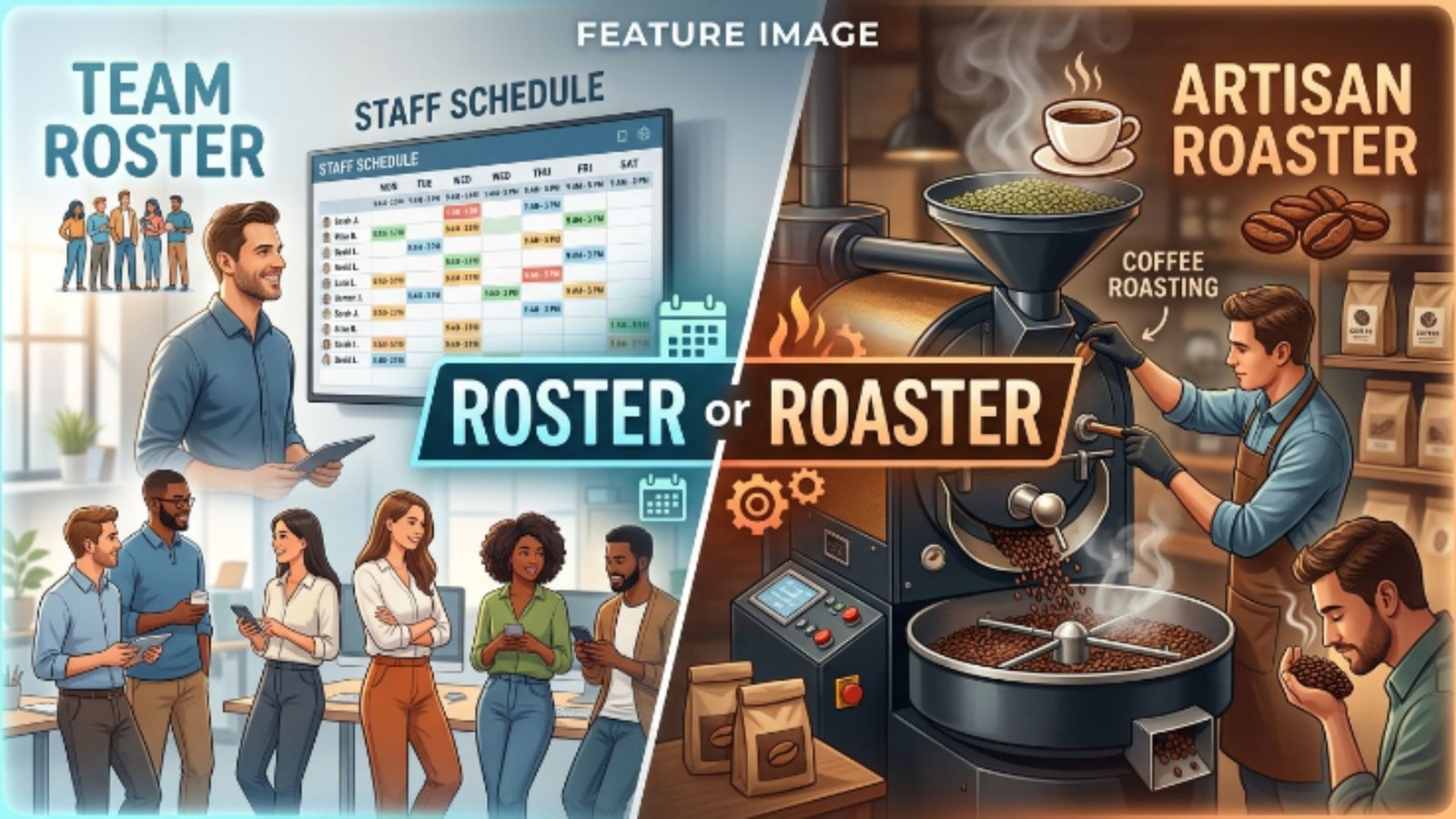
Both words are correct. Roster and roaster are two completely different words that happen to look and sound alike on paper. A roster is a list or schedule of names, usually tied to work, sports, or duty. A roaster is something (or someone) that roasts, most often a kitchen tool used for cooking meat.
They’re not spelling variants of each other. This isn’t a British English versus American English thing, like “colour” and “color.” It’s simply two separate words that got tangled up because of how similar they sound out loud.
Examples
Picture your manager posting the weekly staff roster on the break room wall. Now picture your uncle pulling a golden brown turkey out of the roaster oven on Thanksgiving. Same sounding word, totally different job.
- “Check the team roster before the game starts.”
- “We need a bigger roaster for this year’s turkey.”
Final Answer
If you’re talking about people, shifts, or a list of names, you want roster. If you’re talking about food, heat, or a cooking device, you want roaster. That’s the whole trick, and once it clicks, it sticks.
The Origin of Roster or Roaster
History
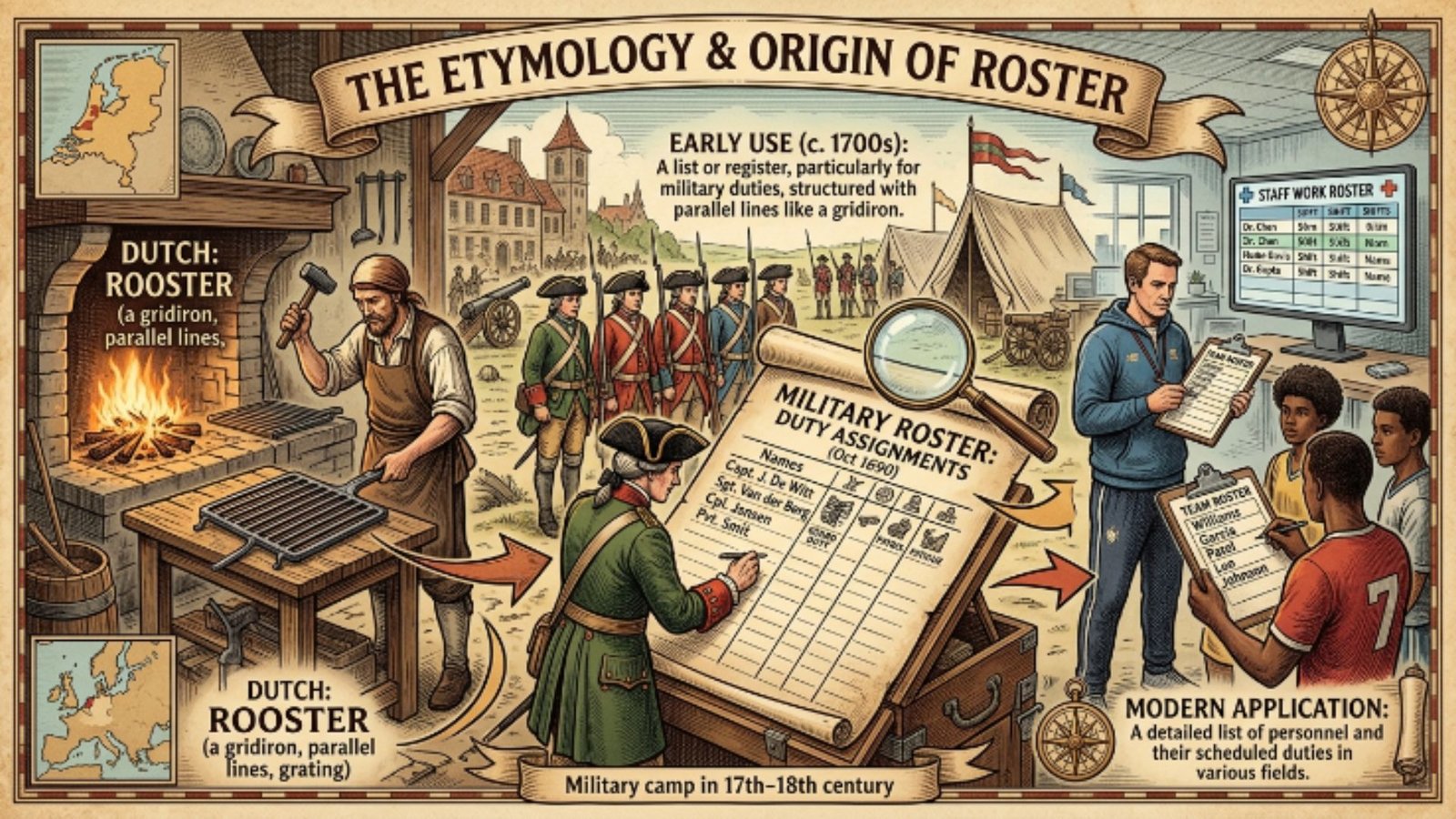
Roster traces back to the Dutch word “rooster,” which originally meant a grid or a table, kind of like a checkerboard pattern used for organizing information. Military units picked it up centuries ago to track duty schedules and troop assignments, and the word’s meaning slowly narrowed down to what we use today: an organized list of people.
Roaster, on the other hand, has a much simpler backstory. It’s built straight from the verb “roast,” which comes from Old French “rostir.” Add the suffix “-er,” and you get a word for the thing (or person) that does the roasting. No grid pattern, no military history, just straightforward word development.
Development
Over time, roster moved beyond the army and into offices, hospitals, schools, and sports leagues. Anywhere people needed an organized work schedule or a list of names, “roster” became the go-to term.
Roaster stuck close to its roots in the kitchen. It picked up a second meaning too, referring to someone who “roasts” another person with playful insults, like at a celebrity roast. But the cooking sense remains far more common in daily speech.
British English vs American English Spelling
Usage Comparison
Here’s something that trips people up: there’s no spelling difference between British and American English for either word. Unlike “flavour” versus “flavor,” both roster and roaster are spelled the exact same way on both sides of the Atlantic.
Some writers assume this is a regional spelling issue, similar to debates around British spelling versus American spelling. It isn’t. Whether you’re writing in UK English or US English, the correct spelling stays fixed. What actually causes trouble is context, not geography.
Key Insight
The real confusion isn’t British English against American English at all. It comes from how close the words sound when spoken quickly, plus how rarely most people write the word “roaster” compared to how often they write “roster” in a work setting.
Since roster shows up constantly in professional writing, emails, and schedules, people’s fingers sometimes default to it, even when they mean the kitchen appliance. That’s a habit issue, not a language rule.
Which Spelling Should You Use?
Workplace or Sports Context
Anytime you’re dealing with an organization, a team, or a group of employees, reach for roster. Think staff schedule, shift schedule, or sports roster. If the sentence involves people management or task organization, roster is almost always your word.
- “The coach finalized the sports roster for the season.”
- “HR updated the employee roster after two new hires joined.”
Cooking Context
If the sentence has anything to do with heat, ovens, or food prep, you’re in roaster territory. This includes literal kitchen tools and the act of roasting food like a whole chicken or turkey.
- “Grandma’s old roaster oven still works perfectly.”
- “We roasted the vegetables in a cast iron roaster.”
Easy Tip
Here’s a trick that actually works: roster has an “s,” just like “schedule” and “staff.” Roaster has an “a,” just like “roast.” Match the letter to the theme, and you’ll rarely mix them up again.
Another simple memory trick: say the sentence out loud and ask yourself, “Am I talking about people or food?” That one question solves the puzzle almost every time.
Common Mistakes with Roster or Roaster
Mixing Up the Words
The most frequent slip happens in casual writing, texts, social media captions, or quick work emails typed in a hurry. Someone means to type “roster” but their fingers land on “roaster,” or the reverse happens because similar sounding words confuse the brain mid-sentence.
This kind of word confusion rarely changes the sentence enough to seem obviously wrong, which is exactly why it slides past spellcheck and gets published anyway.
Context Confusion
Sometimes the mistake isn’t about spelling at all, it’s about not knowing which word fits the situation. A student writing about a debate team might accidentally write “roaster” instead of “roster,” simply because they’ve heard both words but never studied the difference.
This is where context confusion becomes the real enemy. Knowing both definitions cold is the only real fix, because autocorrect won’t catch a wrong-but-real word.
Spelling Carelessness
Rushing through an email or a blog post is the number one cause of typing errors involving these two words. Most people know the difference when they slow down and think about it.
The problem is speed, not knowledge. Reading your sentence back before hitting send catches almost every one of these slips.
Roster or Roaster Meaning (Detailed)
Roster Meaning
A roster is an organized list of names, often connected to duties, shifts, or team membership. You’ll see it used as a staff roster in offices, a team roster in sports, and a duty roster in hospitals or the military.
At its core, a roster answers one question: who’s involved, and when? Whether it’s a company roster listing every employee or a lineup card for tomorrow’s game, the word always points back to organization and planning.
Roaster Meaning
A roaster most commonly refers to a kitchen tool, like a pan or an oven attachment built for roasting food. Think of the deep metal pan used every holiday season for a turkey or a whole chicken.
The word also has a lighter, informal use: someone who playfully mocks or “roasts” another person, usually in a comedy setting or among friends. Context makes it obvious which meaning applies.
Roster or Roaster in Everyday Examples
Workplace
Offices run on rosters. Managers post a weekly work schedule, HR keeps an official roster of everyone on payroll, and new hires get added the moment they sign on.
- “Can you send me the updated staff roster for next week?”
- “Our company roster grew by twelve people this quarter.”
Sports
Coaches build a team roster before every season starts, deciding who plays and who sits on the bench. Fans argue about roster decisions online constantly, especially during trade season.
- “The sports roster got shaken up after the trade deadline.”
- “She’s officially on the varsity team roster this year.”
Kitchen
Home cooks and professional chefs both rely on a good roaster to get that crispy skin on a holiday bird. Some kitchens even keep a dedicated roaster oven just for big family dinners.
- “The roaster in this recipe should hold at least twelve pounds of meat.”
- “I found a vintage roaster at the flea market last weekend.”
Social Media
Casual posts blur these words together more than any other setting. You’ll spot captions like “Made it onto the roster!” for a sports team, right next to “New roaster just dropped” from someone unboxing kitchen gear.
The informal tone of social media makes typos easy to miss, and that’s exactly where most spelling mistakes involving these two words tend to live.
Roster or Roaster – Google Trends & Usage Data
Popularity
Search interest strongly favors roster overall, mostly because of how often it appears in sports news, HR software, and scheduling apps. Searches for roaster spike seasonally, especially around Thanksgiving and the winter holidays when people shop for cooking equipment.
This pattern in Google Trends data lines up perfectly with how each word gets used in real life: roster stays busy year round, while roaster has its moment during roasting season.
Usage Insight
The search popularity gap doesn’t mean roaster is rare or unimportant, it simply means people search for it less often outside of cooking contexts. Writers covering food, kitchen gear, or holiday recipes will naturally use roaster more, while writers covering business, sports, or scheduling will lean on roster.
Understanding this usage insight helps you pick the right word instinctively, based on which topic you’re actually writing about.
Comparison Table: Roster vs Roaster
| Feature | Roster | Roaster |
| Core Meaning | List or schedule of names | Kitchen tool or person who roasts |
| Common Context | Workplace, sports, military | Cooking, kitchen, holiday meals |
| Word Origin | Dutch “rooster” (grid) | Old French “rostir” (to roast) |
| Typical Users | Managers, coaches, HR teams | Cooks, chefs, home bakers |
| Example Phrase | “Staff roster for this week” | “Roaster for the turkey” |
| Spelling Difference (US/UK) | None | None |
Related Word Confusions Worth Knowing
English is full of near-twin words that trip up even careful writers. Laying down or lying down is a classic example, where one involves placing an object and the other involves resting your own body. Flakey or flaky is another common mix-up, though “flaky” is the accepted spelling in most style guides.
These pairs share the same root problem as roster or roaster: the words sound close enough that your ear tricks your hand into typing the wrong one. Building a mental list of these confusing English words genuinely helps your overall writing accuracy over time.
How Writers and Students Can Avoid This Mistake for Good
Building a habit around any tricky word pair takes a little repetition, but it doesn’t take long. Reading your work out loud before publishing catches most context errors immediately, since your ear picks up what your eyes skip over.
Keeping a personal cheat sheet of commonly confused words, including this one, saves time on every future draft. Students especially benefit from writing out a few practice sentences for each word until the difference feels automatic rather than memorized.
FAQs
Is it spelled roster or roaster for a work schedule? It’s roster. Anything involving a list of employees, shifts, or duties uses this spelling.
What is a roaster used for? A roaster is a kitchen tool used to cook meat, most commonly a chicken or turkey, using dry heat in an oven or standalone appliance.
Do British and American English spell these words differently? No. There’s no spelling difference between British English and American English for either word.
Can roaster also refer to a person? Yes, informally. Someone who playfully mocks or teases another person in a comedy setting is sometimes called a roaster, though this is far less common than the kitchen meaning.
What’s an easy way to remember the difference? Match the letters to the theme: roster has an “s” like staff and schedule. Roaster has an “a” like roast.
Conclusion
Roster or roaster isn’t actually a hard problem once you separate the two ideas in your head. One belongs to offices, teams, and schedules. The other belongs to kitchens, ovens, and holiday dinners. Neither one changes spelling between UK English and US English, so you can rule that theory out completely.
The next time your fingers hesitate between the two, ask yourself a simple question: am I talking about people or food? Answer that, and the right word follows automatically. A little practice, a quick read-aloud check before hitting publish, and this mix-up won’t bother you again.