
Scary is the correct spelling. Scarry is not a standard English word. People type “scarry” by accident, usually because doubling letters feels natural in English. But the root word here is scare, and when you add the -y suffix, you get scary. Simple as that.If you’ve landed here typing “scary vs scarry” into Google, you already had the right instinct. Your spellchecker flagged it for a reason.
Trust it.You’ll see “scarry” pop up sometimes, but it’s almost always a spelling mistake, a typo, or someone’s last name (yes, Scarry is a real surname, more on that below).
The Origin of Scary vs Scarry

Let’s rewind for a second. The word scare comes from Old Norse, a word meaning sudden fear or fright. English speakers added the -y suffix to turn it into an adjective, the way we do with words like “sleep” to “sleepy” or “rain” to “rainy”.
So the logic goes: scare plus y equals scary. No extra “r” needed. No double consonant.
Here’s where the confusion creeps in. Plenty of English words double a consonant before adding -y, like “sun” to “sunny” or “fun” to “funny”. That pattern sticks in people’s heads, and they assume every short word follows it. But scare already ends in a silent “e”, and the rule for words like that is different: drop the “e”, add “y”. That gives you scary, not scarry.
This is a classic case of word formation confusion. Your brain sees a pattern, applies it everywhere, and sometimes gets tripped up. It happens to native speakers and English learners alike.
British English vs American English Spelling
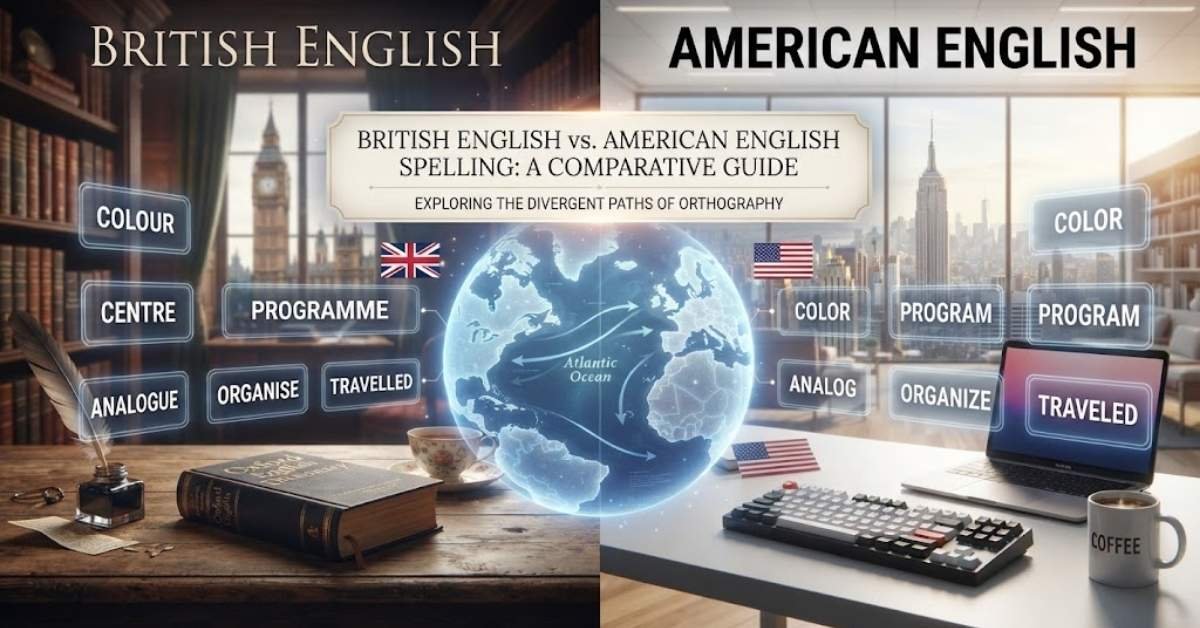
Here’s some good news if you were bracing for a headache. Scary is spelled the exact same way in British English and American English. No transatlantic drama here.
Compare that to words like “colour” versus “color”, or “organising” versus “organizing”. Those differ because of historical spelling reforms, mostly thanks to Noah Webster simplifying American spelling in the 1800s. Scary, though? It dodged that whole mess. It’s same spelling worldwide.
So whether you’re writing for a US English audience or a UK English one, you never have to second-guess this word. That’s rare, and honestly, kind of a relief when you’re already juggling a dozen other spelling rules.
Comparison Table
| Word | American English | British English | Notes |
| Scary | Scary | Scary | Identical spelling |
| Color/Colour | Color | Colour | Differs by region |
| Organize/Organise | Organize | Organise | Differs by region |
| Favorite/Favourite | Favorite | Favourite | Differs by region |
Spelling Rules for Scary vs Scarry
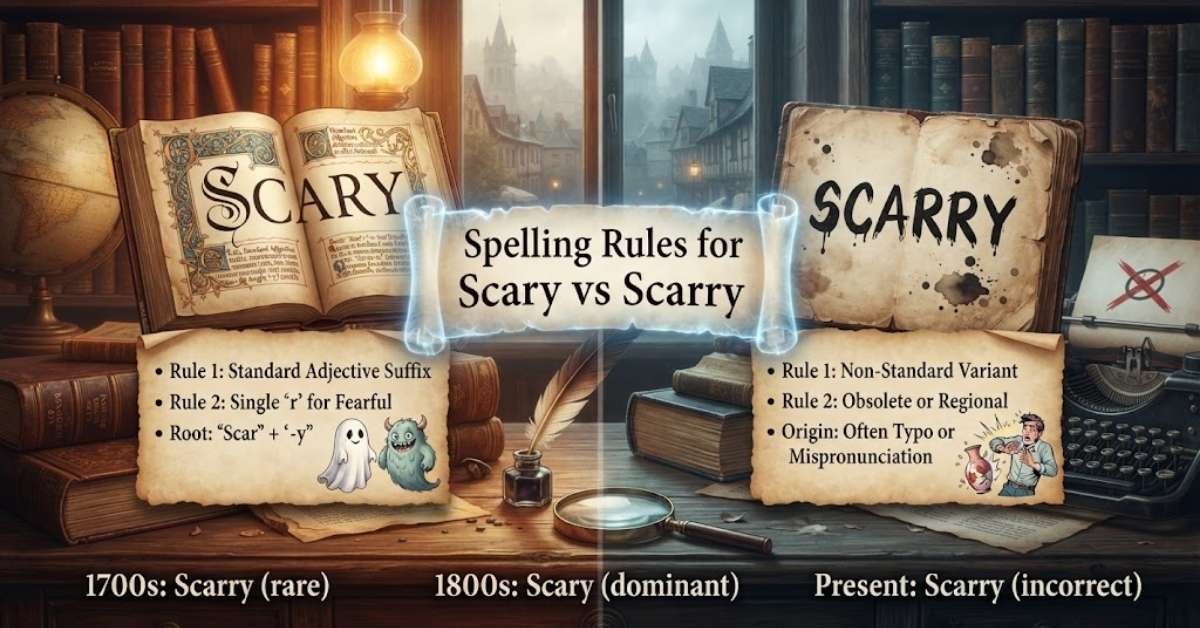
Let’s get practical. There’s a simple memory trick you can use: scare + y = scary. Say it out loud a few times. It sticks.
Here’s the broader orthography rule at play:
- Words ending in a silent “e” usually drop the “e” before adding a suffix starting with a vowel. Think “bake” to “baking”, or “scare” to “scary”.
- Words with a short vowel sound and a single consonant at the end often double that consonant. Think “run” to “running”, or “sun” to “sunny”.
- Scare doesn’t fit that second pattern, because of the silent “e” at the end. That’s the whole reason scarry feels tempting but isn’t correct.
Once you see the pattern, it’s hard to unsee it. This isn’t some obscure grammar rule either. It shows up constantly in everyday English vocabulary, so getting it right pays off far beyond just this one word.
Common Mistakes with Scary vs Scarry
Nobody’s perfect, and typos happen to the best writers. But here are the most common slip-ups people make with this particular lexical error:
- Doubling the “r” out of habit, influenced by words like “funny” or “sunny”.
- Confusing scarry with the surname Scarry (as in Richard Scarry, the children’s book author). The name is spelled with two r’s, but that has nothing to do with the adjective.
- Assuming spellcheck is wrong when it underlines “scarry”. It’s not. It’s doing its job.
- Mixing up scary with similarly spelled words during fast typing, especially on mobile keyboards where autocorrect sometimes overcorrects.
If you’ve made any of these mistakes, don’t sweat it. Spelling awareness improves with repetition, and now you’ve got the rule locked in.
Scary in Everyday Examples
Words don’t live in dictionaries, they live in real writing. Here’s how scary actually shows up across different contexts, and why getting the spelling right matters more in some than others.
Emails
Professional communication has zero room for typos like “scarry”. A misspelled word in a client email can quietly chip away at your credibility, even if the message itself is solid.
If you’re writing something like “the deadline is a bit scary” in a work email, spelling it correctly keeps the tone professional without sounding stiff. It’s a small detail, but small details add up in formal writing.
Stories / Fiction
In storytelling and fiction writing, scary carries a lot of emotional weight. A well-placed “scary” can set the mood for an entire scene, think a dark night, creaking floorboards, or a scary video your character just can’t stop watching.
Writers lean on this word constantly because it’s punchy and instantly understood. Misspelling it as “scarry” in published fiction, though, pulls readers right out of the story.
Social Media
Social media writing is more relaxed, sure, but that doesn’t mean spelling stops mattering. A caption like “this presentation anxiety is scary real” reads fine with the correct spelling and looks sloppy with the wrong one.
Some people assume typos on social platforms are just casual slang assumption, but audiences still notice. Clean spelling, even in short captions, builds trust with followers over time.
Academic / Formal Writing
In academic contexts, precision is everything. Whether you’re discussing climate change consequences or analyzing a novel’s tone, using scary correctly signals attention to detail.
Professors and editors notice these things. A single spelling error won’t tank a paper, but consistent mistakes add up and can affect how seriously your work gets taken.
Scary vs Scarry – Comparison Table
| Aspect | Scary | Scarry |
| Correct spelling | Yes | No |
| Standard dictionary entry | Yes (Merriam-Webster and others) | No |
| Common usage | Very high | Rare, mostly typos |
| Valid as surname | No | Yes (e.g., Richard Scarry) |
| Recommended for writing | Always | Never (except as a name) |
Google Trends & Usage Data
Curious how often people actually search for this? Google Trends data consistently shows “scary” dominating search volume compared to “scarry”. Most searches for “scarry” are actually query variations of people trying to confirm the correct spelling, not people intentionally using the word.
This tells us something important about search intent. When someone types “is scarry a word”, they’re not looking to use scarry, they’re looking for confirmation that scary is right. User intent here leans almost entirely toward clarification, not usage.
Comparison searches like “scary vs scarry” or “scary or scarry” spike periodically, often tied to viral content, Halloween season, or school assignments where students are double checking their English spelling. Search engines have gotten pretty good at understanding these relevant queries, usually surfacing dictionary definitions and grammar guides first.
Why This Mix-Up Happens So Often
It’s worth digging a little deeper into why this particular spelling mistake is so common, because it’s not random.
English is full of inconsistent patterns. Consonant endings and words ending in -y don’t all follow the same logic, and that inconsistency trips people up constantly, not just with scary. Words like “funny”, “sunny”, and “runny” double their consonant, while “scary”, “hazy”, and “lazy” don’t. There’s no single rule that covers every case, which is honestly frustrating for English learners trying to memorize things systematically.
Add autocorrect into the mix, and things get messier. Some spellchecker suggestions on older or poorly updated keyboards don’t always catch every mistake, especially when a misspelled word technically resembles a real name (like Scarry). That gap lets errors slip through.
How Professionals and Writers Can Avoid This Mistake
If you write for a living, whether that’s content writing, blogging, or client-facing emails, small spelling slips can undercut your writing confidence and your reader’s trust.
A few habits help:
- Keep a dictionary bookmarked or installed, even a basic one catches most issues fast.
- Read your work out loud before publishing. Your ear often catches what your eye skips.
- Don’t rely solely on autocorrect. It’s a safety net, not a guarantee.
- When in doubt, search the exact phrase. If “scary vs scarry” brings up grammar sites explaining the difference, that’s your answer right there.
Building this kind of language clarity into your writing habits pays off across everything you write, not just this one word.
FAQs
1. Is scarry a real word?
Not as an adjective meaning frightening. “Scarry” only exists as a surname, most famously belonging to children’s author Richard Scarry. As a description of something frightening, it’s simply a misspelling.
2. Which spelling is correct: scary or scarry?
Scary is the correct and only standard spelling. It’s the form you’ll find in every major dictionary, including Merriam-Webster, and it’s the correct form across both American and British English.
3. Why do people spell scary as scarry?
Mostly because of pattern confusion with other -y suffix words that double their final consonant, like “sunny” or “funny”. Since scare ends in a silent “e” rather than a short vowel plus consonant, it follows a different rule entirely.
4. Can scarry ever be used in informal writing?
Even in casual texting or informal writing, “scarry” isn’t accepted as a stylistic choice the way some slang is. It just reads as a typo. Stick with scary no matter how relaxed the context.
5. Does scary have different spellings in US and UK English?
No. Unlike words such as color and colour, scary stays identical across American English and British English. One less thing to worry about when writing for a global English audience.
6. How can I remember the correct spelling?
Use this memory trick: scare + y = scary. Picture the word “scare” losing its silent “e” and picking up a “y” at the end. That visual sticks far better than memorizing abstract rules.
7. Should I type “or” or “vs” in Google searches?
Either works. Search engine interpretation handles both “scary or scarry” and “scary vs scarry” the same way, pulling up nearly identical results. Google’s gotten smart enough to understand what you’re really asking, regardless of which connector you use.
Conclusion
So here’s the bottom line. Scary is correct. Scarry isn’t, unless you’re talking about a person’s last name.The mix-up happens because English spelling rules aren’t always consistent, and that’s not your fault. Once you know the root word is scare, and that dropping the silent “e” before adding “y” is the rule, the confusion clears up fast.Whether you’re writing emails, fiction, social captions, or academic papers, using the correct spelling builds writing confidence and keeps your professional communication sharp.
It’s a small fix, but small fixes add up to clear communication overall.Got a word you keep second-guessing? Drop it in the comments, share this with someone who needs it, and let’s keep building better writing skills together.