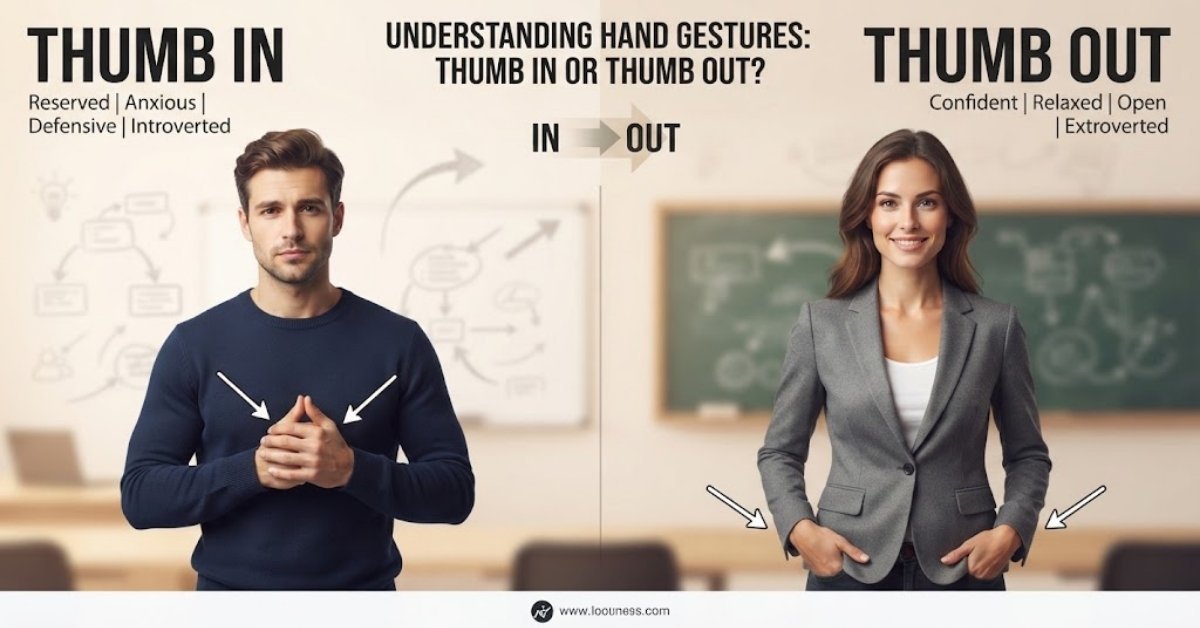
If you’ve ever caught yourself wondering whether your thumb should sit tucked away or stick straight out during a punch, a photo, or even a car ride, you’re not alone. The short answer is this: it depends entirely on the situation you’re in. Thumb in usually signals a relaxed or casual moment, while thumb out often points to action, safety, or a clear signal you want someone else to notice.
That’s the quick version. Now let’s dig into why this tiny detail matters so much across sports, language, and everyday hand gestures.
Thumb In or Thumb Out – Quick Answer
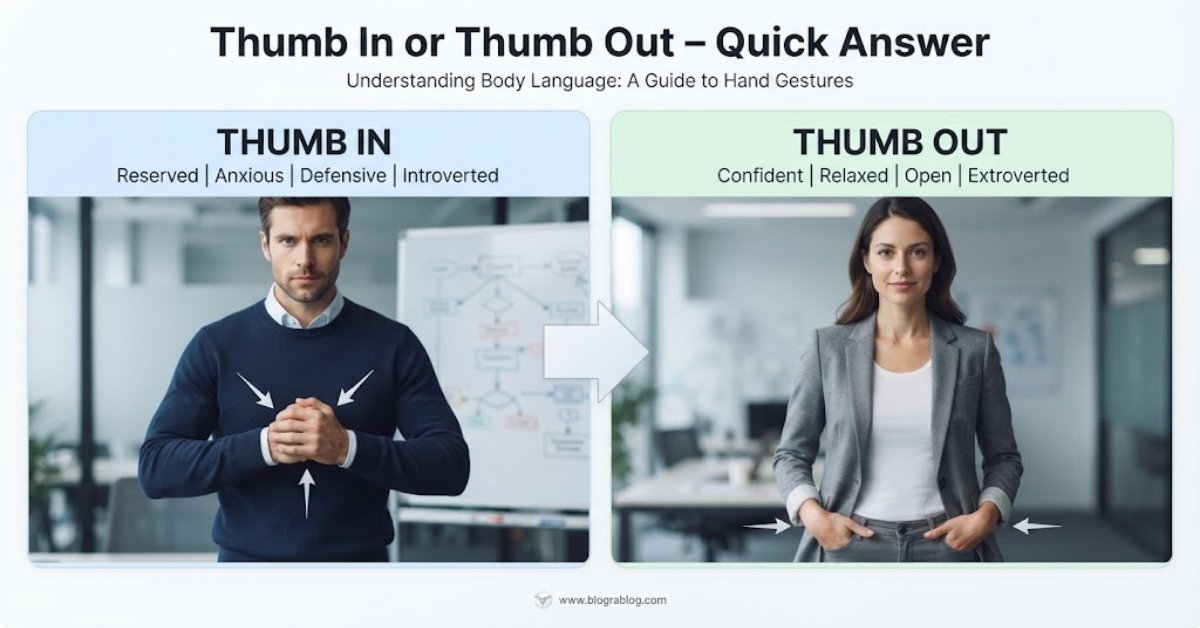
Here’s the deal in plain terms. When someone says “thumb in,” they mean your thumb sits folded against your palm or wrapped inside your fingers. It’s a closed, protected thumb position.
“Thumb out” means the opposite. Your thumb points away from your hand, visible and extended. This small thumb placement choice changes based on what you’re doing, whether that’s gripping a bar, hailing a ride, or posing for a picture.
Context is everything here. The same two words carry different weight in a boxing gym than they do on a roadside.
The Origin of Thumb In or Thumb Out
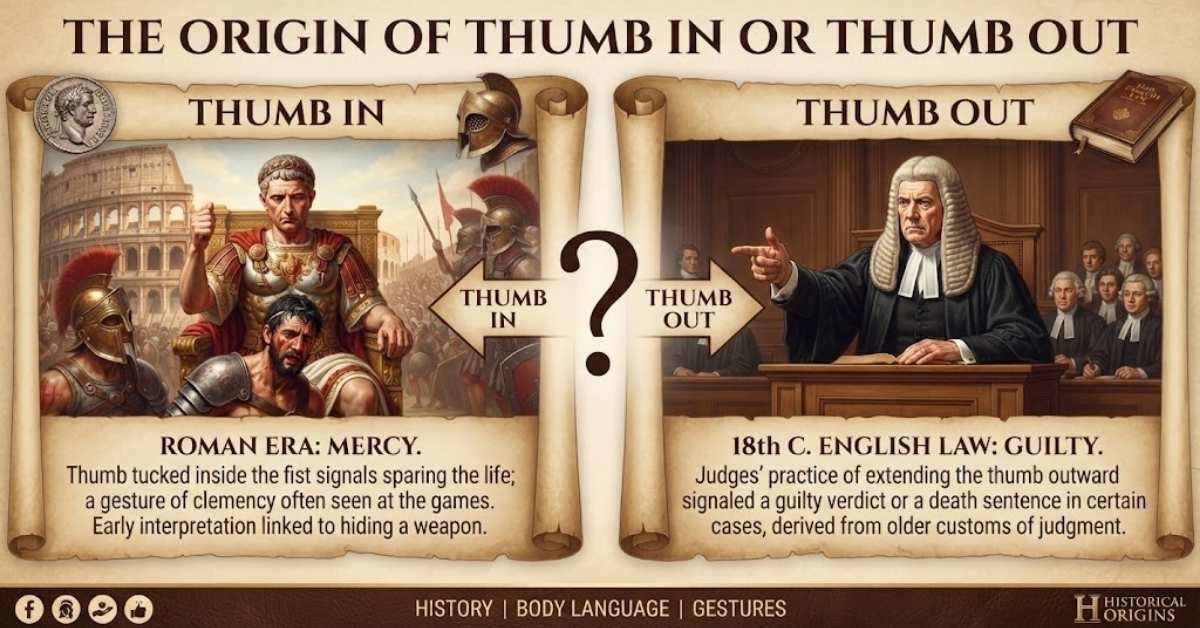
Nobody traces this phrase back to one single moment in history. Instead, it grew out of practical need across different fields, from hand grip safety in sports to hitchhiking etiquette on highways.
Think about it this way. Early boxers learned the hard way that tucking a thumb inside a fist could snap it during impact. That lesson turned into a rule, and the rule turned into a phrase people still repeat today.
Drivers picking up hitchhikers needed a hitchhike signal too, something universal enough that anyone could recognize it from a moving car. A visible, extended thumb became that signal, and it stuck around for generations.
Contexts: Thumb In vs Thumb Out
This phrase shows up in more places than you’d expect. Each setting gives it a slightly different job to do.
Here are the most common situations where you’ll hear this debate come up:
- Hitchhiking and passing cars – an extended thumb tells drivers you need a lift
- Fitness and gym signals – trainers often call out thumb position during lifts
- Photography poses – a relaxed hand with thumb tucked looks more natural on camera
- Grip technique in sports like golf, baseball, and rock climbing
- Casual communication, like giving a thumbs-up gesture to a friend
Each of these examples relies on the same two words but means something completely different depending on where you are and what you’re doing.
Thumb In or Thumb Out in Sports and Fitness
Coaches take this seriously, and for good reason. A wrong thumb position during a lift or punch isn’t just sloppy form, it’s a fast track to injury.
In boxing, keeping your thumb tucked against your fist during a punch protects the joint from grip strength related trauma. Boxing technique instructors drill this into beginners because a dislocated thumb can sideline someone for weeks.
Weightlifters hear similar advice, though the rule sometimes flips. A “hook grip” in Olympic lifting actually asks you to wrap your thumb underneath your fingers for extra safety grip and injury prevention. Sports coaching varies by discipline, so always check what your specific activity recommends.
Thumb In or Thumb Out in Photography and Social Media
Ever notice how professional photos rarely show a stiff, awkward hand? That’s not an accident. Photography poses often call for a tucked thumb because it softens the overall look and avoids a stiff, robotic vibe.
Social media gestures have their own trends too. A relaxed pose with the thumb folded inward reads as effortless, while an extended thumb pointing outward can look intentional, almost like you’re making a statement.
Next time you scroll through your feed, pay attention to hand placement in photos. You’ll start noticing this pattern everywhere, from influencer selfies to professional headshots.
British English vs American English Spelling
You might expect a spelling fight here, but honestly, there isn’t one. Both British English and American English write it the same way, as two separate words: thumb in and thumb out.
Key Point
There’s no hyphenated version like “thumb-in” or a single combined word floating around in either English spelling system. Dictionary recognition treats this as a descriptive phrase rather than a fixed term, so grammar rules for compound words simply don’t apply here.
Comparison Table
| Feature | British English | American English |
| Spelling | Thumb in / Thumb out | Thumb in / Thumb out |
| Hyphenation | None | None |
| Common Usage | Sports, driving, casual speech | Sports, driving, casual speech |
| Formal Guidelines | Same descriptive phrase | Same descriptive phrase |
So if you were hoping for a UK versus US showdown, this one’s a tie. Language usage stays consistent no matter which side of the Atlantic you’re on.
Common Mistakes with Thumb In or Thumb Out
People mix this up more often than you’d think, and it usually comes down to context confusion. Here are a few slip ups worth watching for.
- Using “thumb in” during a hitchhiking signal, when “thumb out” is the correct, visible gesture drivers expect
- Assuming every sport uses the same thumb technique, when grip rules shift between boxing, lifting, and climbing
- Treating this as one hyphenated word instead of two separate, standalone words
- Forgetting that thumb visibility matters for safety in tools, machinery, or finger placement during manual work
Word confusion like this happens because the phrase depends so heavily on setting. Without context, even native English speakers can guess wrong.
Thumb In or Thumb Out in Everyday Life
Outside of sports and grammar, this little gesture pops up constantly. Think about nonverbal communication you use without even thinking about it.
A closed, tucked thumb often reads as reserved behavior or a cautious gesture, almost like you’re holding something back. An open, extended thumb tends to signal confidence, openness, or approval, the kind of body language interpretation people pick up on instantly.
Parents even teach kids hand safety basics using this exact language, warning them to keep thumbs tucked away from car doors, drawers, or moving machinery. It’s a small phrase carrying a surprisingly large amount of everyday practical value.
FAQs
Is “thumb in or thumb out” one word or two?
Always two separate words. There’s no hyphenated or combined spelling in either British or American English.
Which thumb position is correct for hitchhiking?
Thumb out, extended and visible, so drivers can clearly spot the hitchhike signal from a distance.
Does thumb position matter in weightlifting?
Yes, it does. Some grips call for thumb in for extra safety, while others use thumb out depending on the lift and equipment.
Why do photographers prefer thumb in for poses?
A tucked thumb softens the hand’s appearance and avoids that stiff, unnatural look in photos.
Is this phrase used the same way worldwide?
Mostly yes, though hitchhiking culture and specific sports terminology can shift the meaning slightly by region.
Conclusion
At the end of the day, “thumb in or thumb out” isn’t complicated once you know the context. It’s a simple, practical phrase that shows up in gyms, roadside signals, photos, and casual conversation alike.
Pay attention next time you catch yourself making the gesture. You might notice just how much your thumb says without you speaking a single word.
Got a specific situation where you’re not sure which way to go? Drop a comment and let’s figure it out together.