Ever gotten a text that just says “idc” and felt a little unsure what your friend actually meant? You’re not alone. This tiny abbreviation shows up everywhere, from group chats to Instagram comments, and it can feel confusing if you’re new to texting slang.
The short answer? IDC means I Don’t Care. It’s used to show a casual attitude, indifference, or just plain no interest in a topic. But here’s the twist, the tone behind it changes everything, and that’s exactly what we’re going to break down in this guide.
What Does “IDC” Mean in Text?
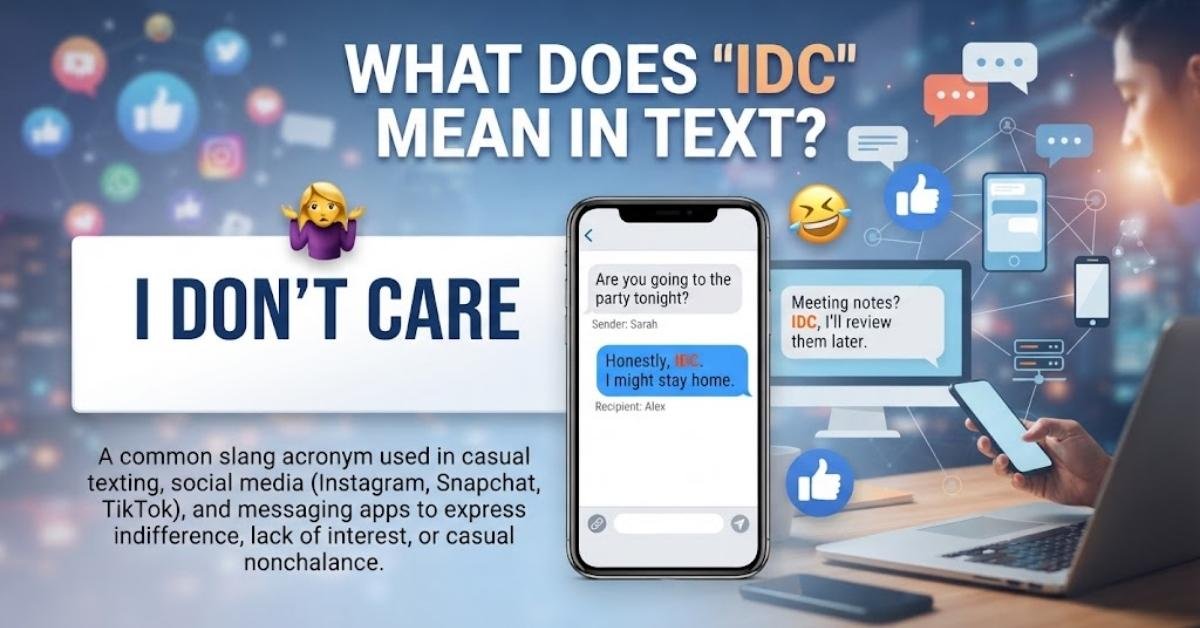
At its core, IDC is a piece of internet slang that stands for I Don’t Care. People use it when they genuinely have no preference, or sometimes when they’re just too tired to argue about something small.
Think about a friend asking “pizza or burgers tonight?” and you reply “idc, both sound good.” That’s a relaxed, easygoing use of the term. It’s not rude, it’s just casual language at work.
The tricky part is language interpretation. The same three letters can carry a totally different emotional tone depending on who’s texting and what’s going on in the conversation context.
Full Form of “IDC”

The full form of IDC is simply I Don’t Care. It’s a short form that’s been part of chat abbreviations for years now, right alongside classics like LOL and BRB.
What’s interesting is how this acronym has stuck around while newer slang comes and goes. People still reach for it because it’s quick, it’s easy to type, and it gets the point across without any extra explaining.
You’ll spot it in online communication everywhere, from text messages to captions under a random selfie. It’s become one of those staple terms in digital vocabulary that basically everyone recognizes now.
How Is “IDC” Used in Chat?
In actual chats, IDC pops up in a bunch of different ways. Sometimes it’s a genuine shrug, other times it’s dripping with sarcasm, and once in a while it’s just a filler word when someone doesn’t want to keep talking about something.
For example, imagine this exchange. Someone texts “should we watch a horror movie or a comedy?” and the reply comes back “idc lol, you pick.” That’s friendly, low stakes, and honestly pretty common in daily conversations.
But context matters a lot here. If someone’s upset and you respond with “idc,” it can land very differently. That’s where tone awareness becomes important, because the same word can either be harmless or hurtful.
What Does “IDC” Mean From a Girl / Boy?
This is one of those questions people search for constantly, and honestly, the meaning doesn’t really change based on gender. But the way it’s delivered often does, at least according to common patterns in girl’s texting style versus boy’s texting style.
When it comes from a girl, IDC from a girl can sometimes carry a bit more emotional reaction behind it, especially in a relationship chat. It might mean “I’m a little annoyed but I don’t want to make a big deal out of it.”
When it comes from a boy, IDC from a boy tends to lean more toward a casual reaction, often meaning exactly what it says, no real preference either way. Of course, this isn’t a hard rule, everyone texts differently.
Is “IDC” Rude or Polite?
Here’s where things get interesting. IDC can be neutral, it can be polite, or it can come off pretty disrespectful, all depending on how and when it’s used.
If a friend asks where you want to eat and you say “idc, you choose,” that’s a neutral tone, nothing wrong there. It shows trust, not carelessness.
But if someone shares something they’re excited about and you respond with a flat “idc,” that can feel dismissive fast. In serious discussions or emotional discussions, this little phrase can create hurt feelings without you even meaning it to.
When Should You Use “IDC”?
There are plenty of situations where dropping an IDC is totally fine and even helpful. It saves time and keeps things moving without overthinking small decisions.
Good moments to use IDC:
- Choosing between two similar options, like tea or coffee
- Casual conversations with close friends where nothing serious is on the line
- Group chats deciding on plans nobody feels strongly about
- Light relaxed chats where speed matters more than detail
Basically, if the stakes are low and nobody’s feelings are involved, IDC works great. It keeps daily conversations flowing without unnecessary back and forth.
When Should You NOT Use “IDC”?
On the flip side, some situations call for a lot more care than a quick IDC can offer. Using it in the wrong moment can send the wrong message entirely.
Moments to avoid it:
- Professional chats or workplace communication, where it can look careless
- Talking to elders, since it may come across as disrespectful
- During arguments, where it often escalates tension instead of calming it
- Right after someone shares bad news or something personal
In these cases, taking a second to actually respond with real words shows social awareness and respect. It’s a small effort that avoids avoiding misunderstandings the hard way.
Best Replies to “IDC”
Getting an IDC back can feel like a conversational dead end, but there are smart ways to respond and keep things moving.
Solid comeback options:
- “Alright, I’ll decide then”
- “Okay no problem, we’ll go with this”
- “Why don’t you care though? Just curious”
- “Got it, keeping it simple today”
- “Fair enough, let’s just pick something”
These replies work because they don’t force a reaction. They either move the conversation along or gently open the door if you sense something’s off underneath that IDC.
“IDC” Meaning on WhatsApp, Instagram, Snapchat
IDC meaning on WhatsApp usually stays pretty close to its original sense, mostly used in one-on-one or group WhatsApp chats when deciding on simple things like plans or timing.
IDC meaning on Instagram shows up a bit differently, often in Instagram comments or Instagram captions as a way to express a laid-back, unbothered vibe. Think of captions like “idc what people think, this is me.”
IDC meaning on Snapchat tends to be quick and playful, fitting the fast-paced nature of Snapchat messages. It’s less about deep meaning and more about keeping replies short between snaps.
Across all these social platforms, the core idea stays the same, it’s just the vibe and speed that shifts depending on where you’re chatting.
Similar Slang Words Like “IDC”
If you’re into modern slang, IDC has plenty of siblings that show up just as often in chat language.
Related terms worth knowing:
- IDK – I Don’t Know, used when you’re genuinely unsure
- IKR – I Know Right, agreeing enthusiastically with someone
- LOL – Laugh Out Loud, marking something funny
- BRB – Be Right Back, stepping away for a moment
- TBH – To Be Honest, introducing an honest opinion
These slang alternatives all serve different purposes, but together they form the backbone of youth language and conversational English online today.
Why IDC Keeps Trending Year After Year
Slang usually fades fast, but IDC has stuck around for a surprisingly long time. Part of the reason is how flexible it is, fitting into almost any casual chat without needing extra explanation.
Another reason is how internet culture rewards short, punchy replies. Nobody wants to type a full paragraph when three letters get the same message across just as well.
It’s also become part of how people express a low key, unbothered personality online. That’s why you’ll keep seeing it in online expressions for a long while yet.
How to Read the Real Meaning Behind an “IDC”
Since IDC can mean so many different things, learning to read between the lines really helps. Pay attention to punctuation, timing, and what came right before it in the chat.
An “idc :)” feels light and easygoing. A flat “idc.” with a period can feel a lot colder, almost like a cold response on purpose.
Also notice how fast the reply came. An instant “idc” might genuinely mean no preference, while a delayed one could hint at frustration hiding underneath.
Conclusion
At the end of the day, IDC is one of those small but mighty pieces of texting slang that says a lot more than three letters should. Whether it’s a positive meaning shrug between friends or a negative meaning cold shoulder, context is everything.
Next time you see it pop up in your text messages, take a second to think about who sent it and why. And if you’re the one typing it, maybe add a little extra so nobody’s left guessing.
FAQs
Is IDC positive or negative?
It genuinely depends on context. Among friends over small choices, it’s neutral or even positive. In emotional moments, it can lean negative.
Is IDC formal or informal?
IDC is strictly informal language, best kept for casual chats rather than professional chats or formal writing.
Can IDC hurt someone’s feelings?
Yes, especially if used right after someone shares something personal or important. It can easily come across as dismissive.
Is it okay to use IDC with elders?
Generally, it’s better to avoid it. Talking to elders with full sentences shows more respect and avoids confusion.
What’s the difference between IDC and IDK?
IDC means I Don’t Care, showing indifference, while IDK means I Don’t Know, showing uncertainty. They’re often confused but mean very different things.