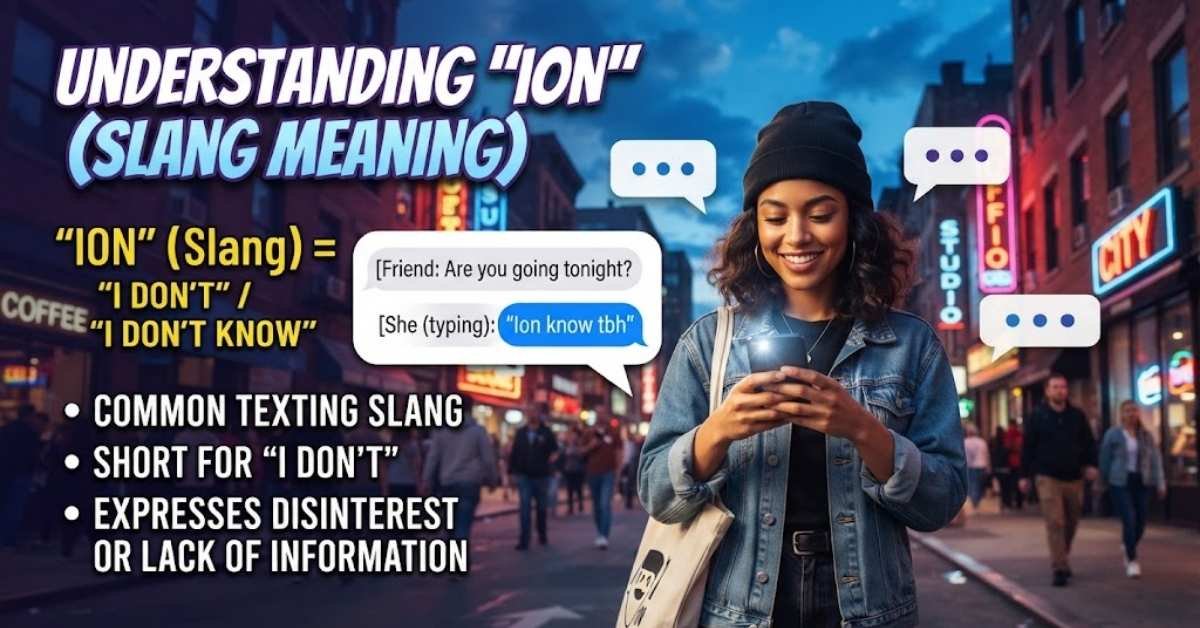
Ever seen “ion” pop up in a text and wondered if it was a typo? You’re not alone. Ion slang meaning is simple: it’s a fast, mashed together way of saying “I don’t.” No science class needed here, this has nothing to do with atoms or chemistry.People use it because typing “I don’t” every single time feels slow. So the two words got squished into one, and now “ion” shows up everywhere from group chats to Instagram comments.
Once you see it a few times, you’ll never mix it up with the science term again.This guide breaks down everything about this text slang term. You’ll learn where it comes from, how to use it right, when to skip it, and what to say back when someone sends it your way.
What Does “Ion” Mean in Text?
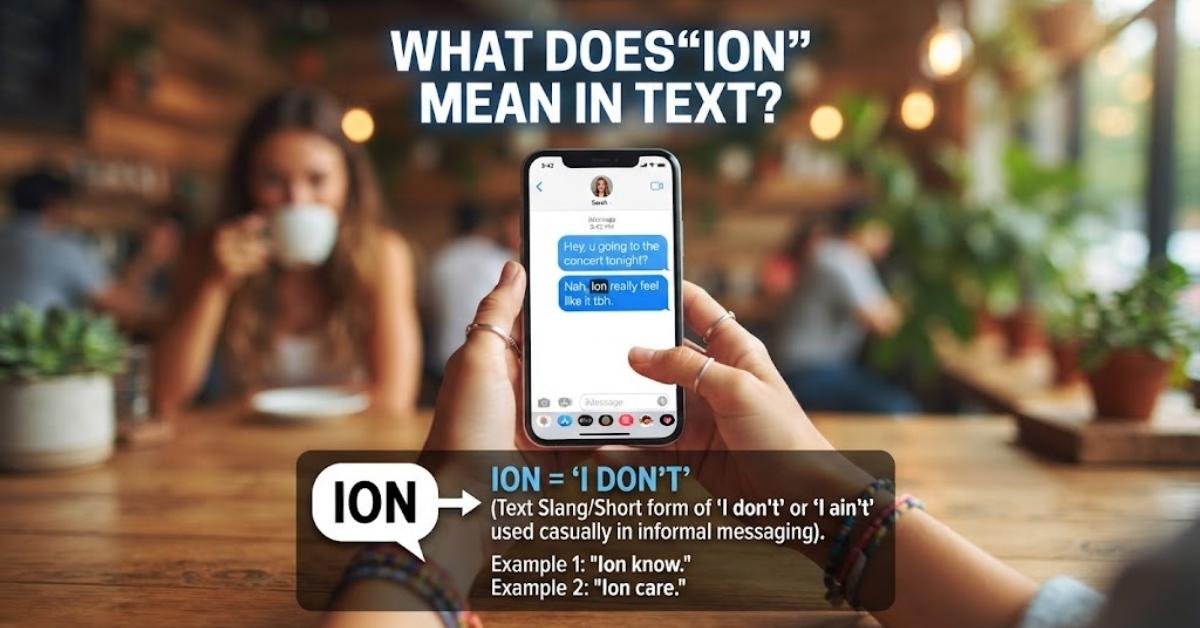
In chat language, “ion” is simply short for “I don’t.” That’s it. No hidden meaning, no deeper trick.
So “ion know” means “I don’t know.” “Ion care” means “I don’t care.” Swap it into any sentence that starts with “I don’t,” and you’ve got the idea. It’s one of those text abbreviation styles that grew out of pure laziness mixed with speed.
Online slang like this isn’t random. It follows a pattern where sounds get blended the way we actually speak out loud. Say “I don’t” fast a few times, and you’ll hear how it naturally slides into “ion.”
Full Form of “Ion” (If Any)
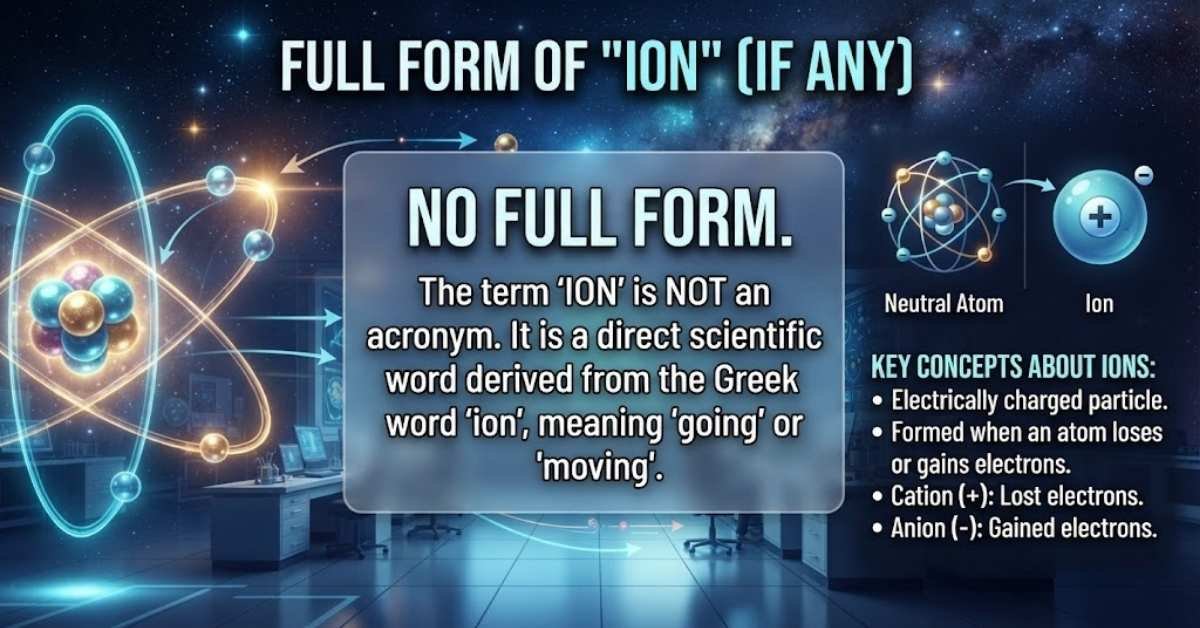
The full form is straightforward: I don’t. There’s no official meaning buried in a dictionary entry, because this is informal language born from texting culture, not a term coined by linguists.
Some people confuse it with the science word “ion,” which refers to a charged atom or molecule. Context always gives it away though. Nobody’s discussing chemistry in a group chat about weekend plans. If someone says “ion wanna go out tonight,” you know exactly what’s going on.
This kind of modern slang shortcut isn’t new either. English speakers have blended words forever, think “gonna” for “going to” or “wanna” for “want to.” “Ion” just joined that same family a bit more recently.
How Is “Ion” Used in Chat?
You’ll spot “ion” attached to all sorts of phrases in everyday text messaging. Here are some real examples people actually send:
- “Ion know what to eat tonight.”
- “Ion care what they think.”
- “Ion feel like it today.”
- “Ion wanna talk right now.”
- “Ion like it, ngl.”
- “Ion see your message till now, my bad.”
Notice how it always plugs into the same slot where “I don’t” would normally sit. That’s the whole trick behind this text shortcut. Once your brain gets used to reading it, you’ll spot it instantly in any instant messaging thread.
It’s especially common with close friends. Formal messaging apps conversations with coworkers or teachers rarely see this term, but casual group chats are full of it.
What Does “Ion” Mean From a Girl / Boy?
Here’s a common worry: does “ion” mean something different depending on who sends it? Short answer, no. Boys and girls both use it the exact same way, as a quicker stand in for “I don’t.”
The meaning doesn’t shift based on gender. What can shift is the tone behind it, and that depends on the situation, not who typed it. “Ion care” from a friend during a lighthearted debate about pizza toppings reads totally different from “ion care” sent after an argument.
If a crush texts “ion know if I’m free this weekend,” that’s not flirting code, it’s genuinely someone unsure of their plans. Don’t overthink single words. Look at the whole conversation for real clues about someone’s attitude or interest.
Is “Ion” Rude or Polite?
This is where things get situational. “Ion” itself isn’t inherently rude, but it can come across as blunt depending on how and where you use it.
Texting a friend “ion feel like going out” is perfectly normal and reads as a casual tone, nothing offensive there. But firing off “ion care” in response to something a family member shared with you emotionally? That can land as a cold tone, even if you didn’t mean it that way.
The safest approach is reading the room. Save “ion” for relaxed, friendly conversations where everyone’s already speaking casually. If the vibe feels even a little formal or sensitive, spell out “I don’t” instead to keep things clearly neutral tone and considerate.
When Should You Use “Ion”?
There are plenty of good moments for dropping “ion” into your texts. Here’s when it fits well:
- Chatting with close friends in casual texting threads
- Quick replies where speed matters more than polish
- Group chats with an already relaxed, joking energy
- Social media comments under memes or casual posts
- Everyday daily chat with people who already text this way
Basically, if the whole conversation already feels loose and unfiltered, “ion” slots right in without raising any eyebrows.
When Should You NOT Use “Ion”?
Some situations call for full words, no shortcuts. Skip “ion” in these spots:
- Job emails or any professional writing
- Messaging teachers or professors about school work or college work
- Talking to elders who might not recognize the term
- Formal writing of any kind, like reports or official messages
- First time talking to someone new, especially in a professional context
Using formal messages language in these situations protects your image. A recruiter reading “ion have availability Monday” probably won’t take you seriously, even if your skills are solid.
Best Replies to “Ion”
Not sure how to respond when someone sends you “ion”? Here are some natural, easy replies depending on the context:
- “Okay no problem” (when they say “ion know” about plans)
- “Alright, maybe later” (when they say “ion feel like it”)
- “Haha same here” (when they say “ion care” about something silly)
- “All good, no rush” (when they say “ion see your message till now”)
- “Why not though?” (when you want to gently push back)
These replies keep the conversation flowing without making things awkward. Matching their casual energy usually works better than replying with a stiff, overly formal message.
“Ion” Meaning on WhatsApp, Instagram, Snapchat
The meaning of “ion” doesn’t change across platforms, but how it’s used can shift slightly based on the app.
On WhatsApp, it usually pops up in one on one chats or family group threads with close relatives who text casually. On Instagram, you’ll mostly catch it in DMs or comment replies under posts and reels, often paired with emojis for extra emphasis. Snapchat sees it constantly in quick back and forth chats since that app is built around speed and casual banter in the first place.
Across all three, it’s part of a bigger wave of internet culture shorthand that keeps evolving. What starts on one app usually spreads to the others within weeks.
Similar Slang Words Like “Ion”
“Ion” belongs to a whole family of shortened phrases. Knowing these helps you read texts faster and use them naturally yourself.
IDK stands for “I don’t know,” basically a cousin of “ion know.” IDC means “I don’t care,” matching up with “ion care.” FR means “for real,” used to stress you’re being honest. TBH means “to be honest,” often used before sharing an opinion. IMK is less common but stands for “in my knowledge.”
These chat abbreviation styles all serve the same purpose: saying more with fewer keystrokes. Once you know a handful of them, texting starts to feel like its own little language.
How “Ion” Became Part of Everyday Texting
This kind of shortcut didn’t appear overnight. It grew out of years of online communication trends where speed always wins over grammar rules. Teen texting culture in particular tends to birth these blends, and platforms like Twitter and TikTok helped push “ion” into wider use over the last several years.
The rise of voice to text typos also played a small role. When people type fast on phones, natural contractions like “I don’t” sometimes get typed exactly how they’re spoken, which is closer to “ion” than the full two words. Over time, that accidental spelling turned intentional, and now it’s a recognized piece of trending slang rather than a mistake.
Common Mistakes People Make With “Ion”
A few mix ups happen often enough to mention. Some people think “ion” is always typo, when really it’s usually intentional slang chosen on purpose for speed.
Others confuse it with the chemistry term and get thrown off in unrelated conversations. And some newcomers overuse it in serious situations where it doesn’t fit, like apologizing to someone or discussing something emotional. Reading the tone of a conversation before dropping in casual text abbreviation always helps avoid awkward moments.
Ion vs Other Popular Text Shortcuts: A Quick Comparison
| Slang | Full Meaning | Best Used For |
| Ion | I don’t | Casual replies, quick texts |
| IDK | I don’t know | Uncertainty about a fact or plan |
| IDC | I don’t care | Showing indifference casually |
| FR | For real | Emphasizing honesty |
| TBH | To be honest | Sharing an opinion upfront |
This table makes it easy to see how “ion” fits alongside other everyday short form expressions without overlapping their exact meaning.
Conclusion
“Ion” is just a quick, casual way of writing “I don’t,” nothing more mysterious than that. It fits naturally into casual chats with friends, group texts, and social media comments, but it’s smart to swap it for full words in professional messages or conversations with people who value more formal language.
Once you understand the pattern, spotting and using “ion” becomes second nature. It’s simply one small piece of how digital communication keeps shifting to match the pace of modern life. Got a favorite text shortcut of your own? Drop it in the comments, we’d love to see which ones you’re using in 2026.
FAQs
What does “ion” mean in texting?
It means “I don’t.” It’s a shortened, blended version used in casual text messaging.
Is “ion” a real word?
Not in the dictionary sense. It’s internet slang, a texting shortcut rather than a formal English word.
Does “ion” mean something different from a girl or boy?
No, the meaning stays the same regardless of who sends it. Only the tone changes based on context.
Is it rude to say “ion care”? I
t depends on the situation. Among friends it’s normal, but in serious or emotional conversations, it can come across as dismissive.
Should I use “ion” in professional emails?
No, avoid it in job emails or any formal writing. Stick to full words like “I don’t” to keep things professional.
Is “ion” the same as the chemistry term ion?
No, they’re completely unrelated. The slang term has nothing to do with charged particles or science.