Ever typed labelling into an email, only to have spellcheck underline it in red? Then you switch to labeling, and somehow that looks wrong too.Here’s the short version: both spellings are correct. Labelling is the British English and Commonwealth form, while labeling is the American English version. Neither one is a mistake, it just depends on who’s reading.
This guide breaks down exactly where that split comes from, which spelling fits your target audience, and how to stay consistent whether you’re writing an email, a product tag, or a formal report.
Quick Answer
Both labelling and labeling are correct. It just depends on where your reader lives.
British English and Commonwealth English use labelling with a double-L. American English sticks to labeling with a single-L. Neither one is a typo, so relax if spellcheck keeps flagging one of them.
Examples
- “The new food labelling rules start next month.” (UK)
- “The company updated its product labeling guidelines.” (US)
- Your audience location decides which version reads as natural.
The Origin of Labelling or Labeling
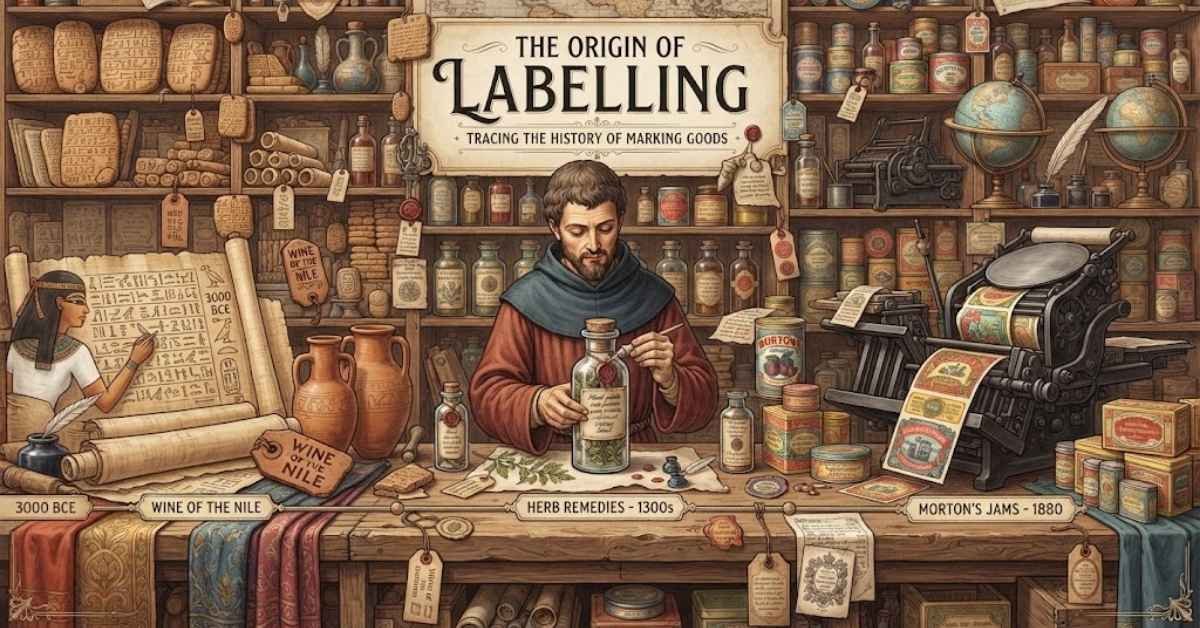
The word label traces back to Old French, from a small term called lambel, which described a ribbon or strip of cloth. Over time, it came to mean a tag or name attached to something, a description of what an item is.
By the Middle Ages, the word had settled into English as we’d recognize it. What split later was the spelling convention, not the meaning. English spelling reforms in the US simplified plenty of double consonants, and label got caught up in that wave.
Much of that shift traces back to Noah Webster, the American lexicographer who published his own dictionary in the early 1800s. Webster wanted American English to look distinct from British English, partly for national identity and partly to make spelling more phonetic. Dropping the extra L in words like labeling, traveling, and canceling was part of that project, and it stuck.
Meanwhile, British publishers kept the older doubling pattern alive through Oxford and later Cambridge references. Neither side “won,” they just diverged, and both versions have carried on unchanged for close to two centuries now.
British English vs American English Spelling
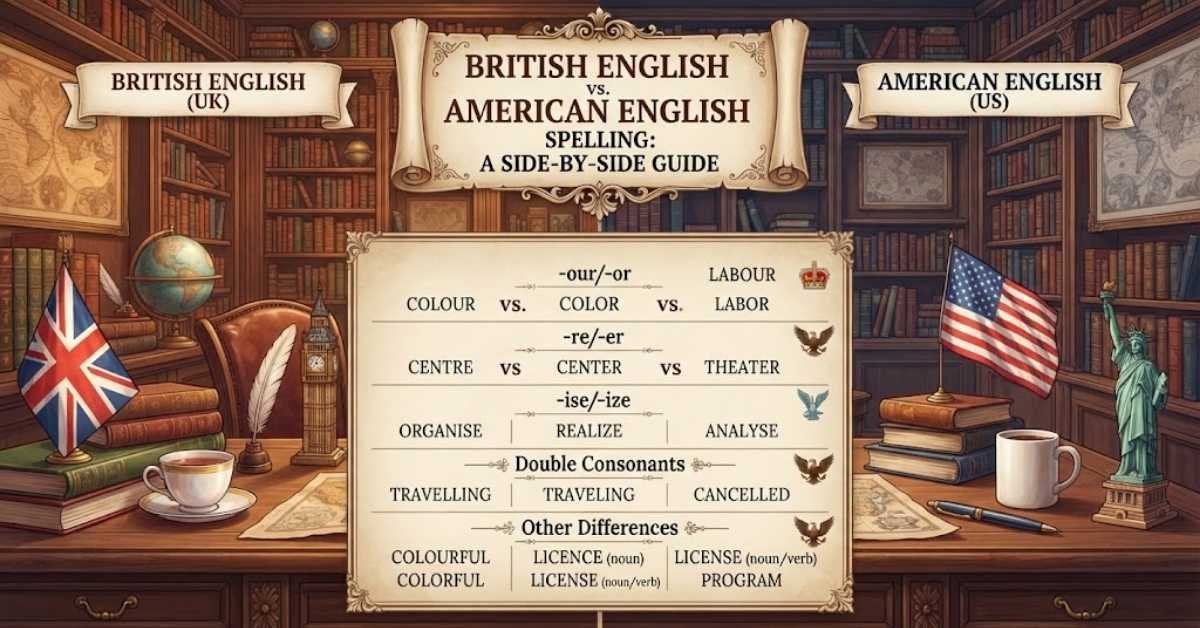
This isn’t really a debate about right or wrong. It’s a matter of regional spelling, the kind that shows up across dozens of English verbs.
Key Rule Difference
British spelling rules double the final L before adding -ing or -ed, even when the stress doesn’t land on that syllable. American spelling rules skip the doubling unless the stress actually falls there. That’s why you’ll see labelled in London and labeled in New York, describing the exact same action.
This same double-L rule versus single-L rule shows up in words like traveling/travelling and canceling/cancelling. Once you spot the pattern, it stops feeling random.
Comparison Table
| Form | British English | American English |
| Present participle | Labelling | Labeling |
| Past tense | Labelled | Labeled |
| Noun (unchanged) | Label | Label |
| Style guide | Oxford, Cambridge | APA, Chicago |
Oxford and Cambridge both back the double-L. APA and Chicago style guides, the two most common in American academic writing and business writing, back the single-L.
Which Spelling Should You Use?
Pick based on your target audience, not your personal habit. Writing for a US English readership? Go with labeling. Writing for UK English, Australia, or Canada? Use labelling.
If you’re producing content for a global audience or a genuinely mixed audience, American spelling tends to reach further online simply because of search volume. But that’s a search intent call, not a grammar rule, so don’t feel boxed in.
Think about where the piece will actually live too. A blog aimed at American shoppers should read naturally to them, so labeling fits. A government or Commonwealth countries resource should mirror the local standard, so labelling fits instead. When you’re not sure who’s reading, check your analytics. Most sites can show you which country sends the bulk of traffic, and that number should settle the debate quickly.
Professional Tip
Set your spellcheck to match your target country before you start writing, not after. It saves you from a messy find-and-replace later, and it keeps your writing consistency intact across a whole project.
It also helps to build a short style sheet for recurring projects. Note down your chosen spelling, your preferred style guide, and any exceptions, then share it with every writer or editor on the team. A five-minute setup step like this prevents hours of inconsistent copy later.
Common Mistakes with Labelling or Labeling
Most people don’t get this wrong on purpose. They just switch English variants halfway through a document without noticing.
Frequent Mistakes
- Mixing labelling and labeling in the same article
- Using labelled with American labeling regulations text
- Assuming one spelling is “more correct” than the other
- Letting autocorrect silently swap the spelling mid-project
Correct Approach
Decide your style consistency rule at the start. Stick to it through every heading, caption, and footnote. If you’re editing someone else’s draft, match whatever spelling convention they already used rather than layering in your own.
A quick trick for catching slip-ups: use your word processor’s find function to search for the version you’re not using. If labelling turns up in a document meant for American readers, you’ve found your fix. This takes thirty seconds and catches most inconsistencies before publishing.
Translation tools and AI writing assistants sometimes default to one spelling regardless of your settings, so it’s worth a manual pass even after using them. Spellcheck tools aren’t always tuned to your specific English convention, especially browser-based ones that assume American defaults.
Labelling or Labeling in Everyday Examples
Seeing the word in context makes the choice easier than memorizing a rule ever will.
Emails
A UK-based marketing team might write, “We’re labelling the new product line this week.” Their American counterpart would write the same sentence with labeling, word for word otherwise.
News
Journalists tend to follow their outlet’s house style. A British paper reports on food labelling laws; a US outlet covers food labeling regulations. Same topic, different regional standard.
Social Media
Casual posts are more forgiving, but brands with an international presence often pick one spelling and use it everywhere, on every platform, to protect brand trust.
Formal Writing
Formal writing, contracts, and product labeling regulations documents need the tightest consistency. A compliance officer or lawyer will expect one spelling used throughout, matched to the country the document applies in.
Academic papers fall under this same umbrella. A student submitting to a US journal following APA style should use labeling everywhere, from the abstract to the references. A researcher publishing under Cambridge style conventions should use labelling instead. Reviewers do notice when spelling switches mid-paper, and it can read as sloppy even when the actual research is solid.
Labelling in Food and Product Packaging
This is where the spelling choice actually carries weight beyond style. Product labeling and food labelling are legal terms in many countries, tied directly to health regulations and packaging compliance.
A US company shipping goods needs accurate labeling that satisfies packaging regulations in that market. A UK or Australian exporter needs accurate labelling that meets Commonwealth standards. Getting the spelling wrong on a legal document won’t cause real harm, but getting the terminology inconsistent across regulatory filings can slow down approval.
Consider a food brand selling in both the US and the UK. Its American packaging reads “Nutrition Labeling” per FDA guidance, while its British packaging reads “Food Labelling” per UK Food Standards Agency wording. Same product, same information, two spellings, and both are entirely correct for their market. This is normal practice, not an error, and shoppers on either side rarely notice the difference at all.
Technology companies run into the same split when documenting file labeling systems or data tagging tools. A US-based software firm writes clear labeling in its documentation; a UK development team writes clear labelling in theirs. If your product serves both markets, some companies maintain two versions of key documents rather than pick a single spelling and risk alienating either audience.
How Style Guides Handle Labelling or Labeling
Style guides exist precisely so teams don’t argue about this word by word. If your organization follows APA style or Chicago style, default to labeling. If you’re working under Oxford style or Cambridge style, default to labelling.
Publishing houses, academic writing departments, and scientific research journals usually specify their preferred English convention in a style manual. When in doubt, check that document before you check a dictionary.
Labelling or Labeling – Google Trends & Usage Data
Search behavior generally mirrors population and market size. American English tends to dominate raw search volume simply because the US has more English speakers online, while UK, Australian, and Canadian searches lean toward the double-L form.
Rather than quote invented numbers, the safest approach is this: check current Google Trends data for your own target country before publishing, since search patterns shift over time and vary by industry.
Keyword Variations Comparison
| Keyword Variation | Typical Region |
| Labeling | United States |
| Labelling | United Kingdom, Australia, Canada |
| Label | Global, unaffected by regional spelling |
| Labeled / Labelled | Follows the same regional split |
Labelling and Labeling Beyond the Dictionary
Outside of packaging and papers, this same spelling choice quietly shapes content writing across the internet. Marketers, writers, and students run into it constantly, often without realizing there’s a rule behind the confusion at all.
If you write for websites that serve readers worldwide, a practical shortcut is checking where most of your traffic comes from before locking in a spelling. Tools built into most content management systems will show visitor location, and that single data point often settles arguments faster than any style guide debate.
Freelancers juggling clients across the US and UK face this most often. One client wants labeling because their business is based in Texas, and the next wants labelling because theirs is based in Manchester. Keeping a simple client-by-client note of which spelling they prefer avoids the awkward correction email later.
Conclusion
Labelling and labeling are two branches of the same word, split by geography rather than grammar. British English, Australian English, and Canadian English double the final L. American English keeps it single-L. Neither spelling is broken, and neither one will confuse a native reader.
What actually matters is consistency. Pick the version that matches your audience location, your style guide, or your target country, and hold that choice through the whole piece. Do that, and this word will never trip up your writing again.
FAQs
Is labelling or labeling correct in the US?
Labeling is correct in American English. Labelling is the British and Commonwealth form.
Why does English have two spellings for the same word?
It comes down to differing American spelling rules and British spelling rules around doubling consonants before suffixes like -ing and -ed.
Which spelling should students use in academic writing?
Follow the style guide your institution requires, usually APA or Chicago for American schools, Oxford or Cambridge conventions elsewhere.
Does Canada use labelling or labeling?
Canada generally follows British spelling rules, so labelling is more common there, though American influence means labeling shows up too.
Can I switch spellings within one article?
No. Mixing English variants in a single piece looks inconsistent and can hurt readability. Pick one and stay with it.
Is labelled the same rule as labelling?
Yes. Both labelled and labelling follow the double-L pattern used in British English, mirroring labeled and labeling in American English.
Does this rule apply to other similar words?
Yes. Traveling/travelling, canceling/cancelling, and modeling/modelling all follow the same regional spelling split.