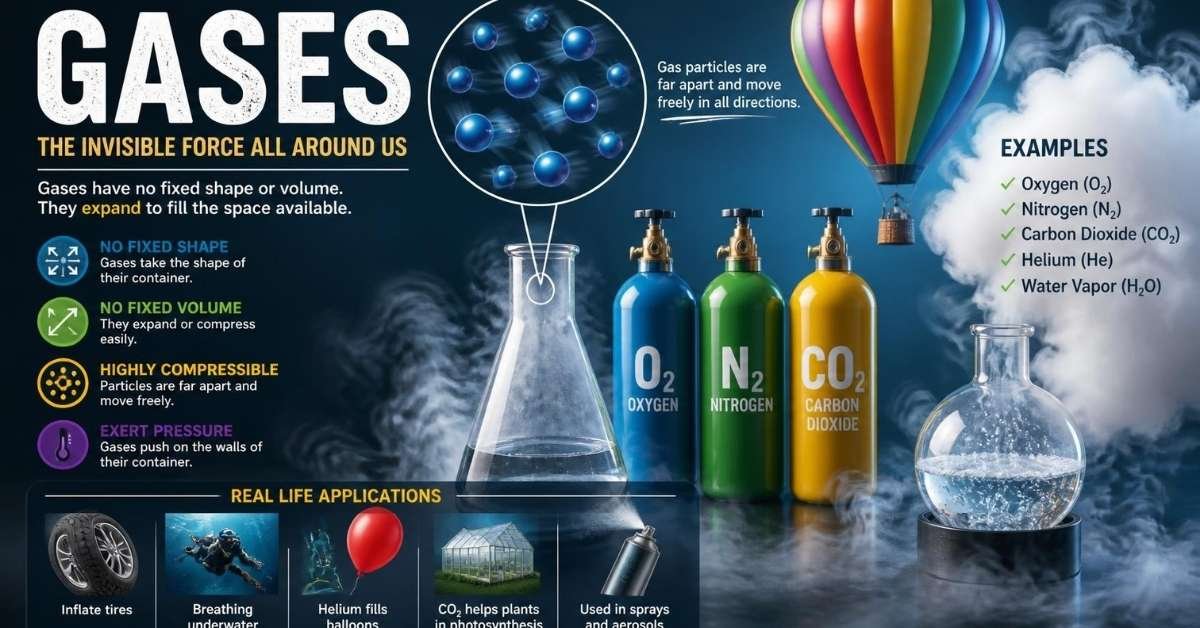
Ever typed “gasses” in an email and then paused, wondering if that’s even a word? You’re not alone.This mix-up trips up students, writers, and professionals all the time. Gas turns into a plural in a way that just doesn’t feel intuitive, and autocorrect doesn’t always help either.Here’s the good news. The rule isn’t complicated once you see it laid out. In this guide, you’ll get the correct plural noun form, the verb form, real examples from emails to news headlines, and the most common mistakes people make with this word.
No dense grammar lecture here. Just a clear answer, some context on where the word came from, and enough examples that you’ll never second-guess yourself again.
Quick Answer
Gases is the correct plural noun for more than one gas. If you’re talking about oxygen, nitrogen, or carbon dioxide in a group, gases is your word.
Gasses, on the other hand, is a verb. It shows up when something “gasses” a room or a device “gasses” up during a chemical reaction. Think of it like “passes” or “kisses,” an action word tied to a subject doing something.
So if you’re writing a lab report, an email, or a quick social post about industrial gases or greenhouse gases, you want gases. Save gasses for sentences where someone or something is actively releasing a gas.
The Origin of Gasses or Gases

The word “gas” itself has a pretty interesting backstory. It was coined by Jan Baptist van Helmont, a Flemish chemist working in the early 17th century. He needed a term for substances that didn’t behave like solids or liquids, and he borrowed inspiration from the Greek word for chaos.
That’s right. The very word we use for oxygen and nitrogen today came from a guy trying to describe disorder and unpredictability. It’s a fitting bit of etymology when you think about how gases behave, spreading out, filling space, refusing to sit still.
Once the term caught on, English speakers needed a plural form. Gases became the standard noun form over time, while gasses developed as the third-person singular verb, following normal English pluralization rules for words ending in a single “s.”
British English vs American English Spelling

Here’s where a lot of confusion creeps in. People assume this is a classic British English versus American English spelling fight, like “colour” versus “color.” It isn’t.
Both US English and UK English use gases as the plural noun. The verb form, gasses, is also shared across Commonwealth English and Global English. There’s no dialect split here, which honestly surprises a lot of writers who expect one.
What does differ slightly is style guide preference in certain publications, but that’s more about formatting choices than actual grammar rules. If you’re writing for an international audience, you can use gases confidently without worrying about regional pushback.
Comparison Table
| Word | Part of Speech | Example Sentence | Used In |
| Gases | Plural noun | The lab measured three gases: oxygen, nitrogen, and hydrogen. | US and UK English |
| Gasses | Verb (third-person singular) | The engine gasses up quickly under pressure. | US and UK English |
| Gas | Singular noun | Helium is a noble gas. | US and UK English |
Which Spelling Should You Use?
The rule is simpler than most people think. Ask yourself: is this word doing an action, or is it naming a group of things? If it’s naming things, like toxic gases or emissions, go with gases. If it’s describing an action, like a machine that gasses a container, use gasses.
This isn’t about US vs UK English. It’s about noun vs verb usage, plain and simple. Once that clicks, you’ll stop second-guessing yourself every time you type the word.
Audience-Based Advice
- Students and academic writers: stick with gases for science assignments, lab reports, and chemistry reports. Your professors expect standard scientific terminology.
- Journalists and content writers: use gases for news writing about pollution, air quality, or environmental topics. It reads cleaner and avoids confusion.
- Technical and industrial writers: rely on gases when describing industrial gases, gas leaks, or gas detection systems. Save gasses strictly for verb usage in technical manuals.
- Everyday communication: whether you’re texting a friend or writing a quick note, gases is almost always what you mean.
Common Mistakes with Gasses or Gases
Grammar mistakes with this word pop up more often than you’d expect, even among experienced writers. Let’s break down the three biggest ones.
Using gasses as a plural noun
This is the number one slip-up. People write “the gasses in the atmosphere” when they mean “the gases in the atmosphere.” It’s an easy mix-up because both words look nearly identical, but only one works as a common noun.
Remember the trick: if you can replace it with “things” (as in “the things in the atmosphere”), you need the noun form, gases. Don’t overthink it beyond that.
Assuming it’s a US vs UK difference
As we covered earlier, this isn’t a dialect difference like “colour” and “color.” Writers sometimes assume swapping spellings based on their audience’s location will fix things, but it won’t. Gases stays gases whether you’re writing for London or Los Angeles.
This mistake often comes from confusing spelling differences in other word pairs with pluralization rules here. They’re two completely separate grammar issues.
Overcorrecting
Some writers, once they learn the correct rule, start overcorrecting and avoid gasses entirely, even when the sentence calls for a verb. You’ll see awkward phrasing like “the device gases the room” when it should be “the device gasses the room.”
Consistency in writing matters, but so does knowing when each form actually applies. Don’t swing too far in either direction. Match the word to its job in the sentence, and you’ll be fine.
Gasses or Gases in Everyday Examples
Seeing this word in real contexts makes the rule stick a lot better than memorizing definitions. Let’s walk through how it shows up across different types of writing.
Emails
In professional emails, you’ll mostly use gases as a noun. For example: “Please review the attached report on greenhouse gases and their impact on our facility’s emissions targets.” Clean, direct, no confusion.
If you need the verb form in an email, it might look like this: “The system gasses the chamber automatically once the seal is confirmed.” Short, functional, and correct.
News Writing
Journalists covering environmental topics lean heavily on gases as a noun. Headlines like “Rising Greenhouse Gases Linked to Extreme Weather” or “Toxic Fumes Force Evacuation Near Chemical Plant” both use standard pluralization rules correctly.
News writing values clarity above all else, so reporters rarely use the verb gasses unless describing a specific action, like equipment malfunctioning or releasing fumes.
Social Media
On platforms like Twitter or Instagram, people often shorten and simplify language, but the grammar rule still holds. A post like “Did you know noble gases like helium don’t react with much of anything?” uses the correct plural noun form.
Casual writing doesn’t mean incorrect writing. Even in a quick caption about air quality or a viral post about car exhaust gases, sticking to gases keeps your content credible.
Formal Reports
Formal reports, whether in industrial contexts or scientific journals, demand precision. You’ll see phrasing like “Authorities warning residents about elevated industrial gases near the facility” or “the combustion process released several chemical substances into the air.”
This is where getting it wrong really costs you credibility. A misplaced gasses in a technical document can make readers question your expertise, even if the rest of the content is solid.
Gasses or Gases – Google Trends & Usage Data
Curious how often people actually search for this term? Search behavior data shows a steady stream of confusion around this exact question every year, especially among students, content writers, and ESL learners.
Google Trends patterns reveal spikes in searches around back-to-school periods, which makes sense given how often chemistry and environmental science classes bring up states of matter. Interest also ticks up whenever major news stories cover emissions, pollution, or industrial gases.
What’s interesting is that published material across major outlets overwhelmingly favors gases as the noun form, by a wide margin. This consistency across US English and UK English publications confirms there’s no real regional debate here, just an ongoing spelling mix-up that trips people up.
Scientific & Grammar Concepts Related to Gasses or Gases
Understanding the broader context around this word helps you avoid mistakes in the future. Let’s break it into three layers.
Primary
At its core, this topic connects to basic grammar rules around pluralization, verb conjugation, and part of speech identification. Knowing whether a word functions as a noun vs verb in a sentence solves most confusion instantly.
The state of matter classification also matters here. Gas is one of the four fundamental states, alongside solid, liquid, and plasma, and chemistry students encounter this term constantly.
Secondary
Beyond grammar, this word ties into real-world subjects like greenhouse gases, carbon dioxide emissions, and noble gas examples such as helium and neon. These terms show up in environmental science, industrial settings, and everyday news coverage.
Gas leaks, gas detection systems, and ventilation requirements also depend on correct terminology in technical writing. A single spelling error in a safety manual isn’t just a grammar issue, it’s a clarity issue that could affect how someone interprets a warning.
Semantic & Contextual
Words related to this topic include diffusion, combustion, fumigation, and pest control, all of which describe how gases behave or get used. Context clues like these help readers and search engines understand the semantic relationship between your content and related searches.
Contextual usage also extends to phrases like “gas a room” or “gas equipment,” which use the verb form correctly when describing a specific action taking place.
Comparison Table: Gasses vs Gases
| Category | Gases | Gasses |
| Function | Plural noun | Third-person singular verb |
| Example | The atmosphere contains multiple gases. | The machine gasses up before startup. |
| Common Use | Scientific writing, news writing, formal writing | Technical manuals, action-based sentences |
| Frequency in English | Very high | Low, specific use cases only |
| Regional Difference | None | None |
Frequently Asked Questions About Gas Pluralization
A quick, extra round of clarity never hurts, especially for a word this commonly mixed up.
Is “gasses” ever correct as a plural noun? No. Gasses only works as a verb. If you’re naming more than one gas, gases is always the right choice, regardless of context or audience.
Do British and American English spell this differently? No, both use gases for the plural noun and gasses for the verb. This isn’t a US vs UK spelling issue like other word pairs you might already know.
What’s an easy way to remember the difference? Picture “passes” and “kisses.” Those verbs end in double consonants before the “es.” Gasses follows that same verb pattern, while gases stays simple as a noun.
Conclusion
At the end of the day, this comes down to one simple question: are you naming things, or describing an action? Gases names things, like oxygen, nitrogen, and every other substance floating around in our atmosphere. Gasses describes an action, something actively happening to a room, container, or piece of equipment.
Once you internalize that distinction, you’ll never second-guess yourself again, whether you’re drafting a formal report, writing a quick email, or posting about air quality on social media. Keep it simple, keep it consistent, and you’ll get it right every time.
FAQs
Q: Which spelling should I use in academic writing?
A: Always use gases for academic writing, lab reports, and science assignments. It’s the standard scientific terminology expected in these settings.
Q: Can “gasses” be used in a sentence about pollution?
A: Only if you’re describing an action, like “the factory gasses the surrounding air with harmful byproducts.” For naming the substances themselves, use gases.
Q: Is this difference likely to change by 2026?
A: No. This is a stable grammar rule, not a trend. The noun vs verb distinction has remained consistent for decades and shows no signs of shifting.
Q: Why do so many people get this wrong?
A: The two words look almost identical, and most people don’t stop to think about part of speech before typing. It’s a quick, easy mistake that a little awareness fixes fast.