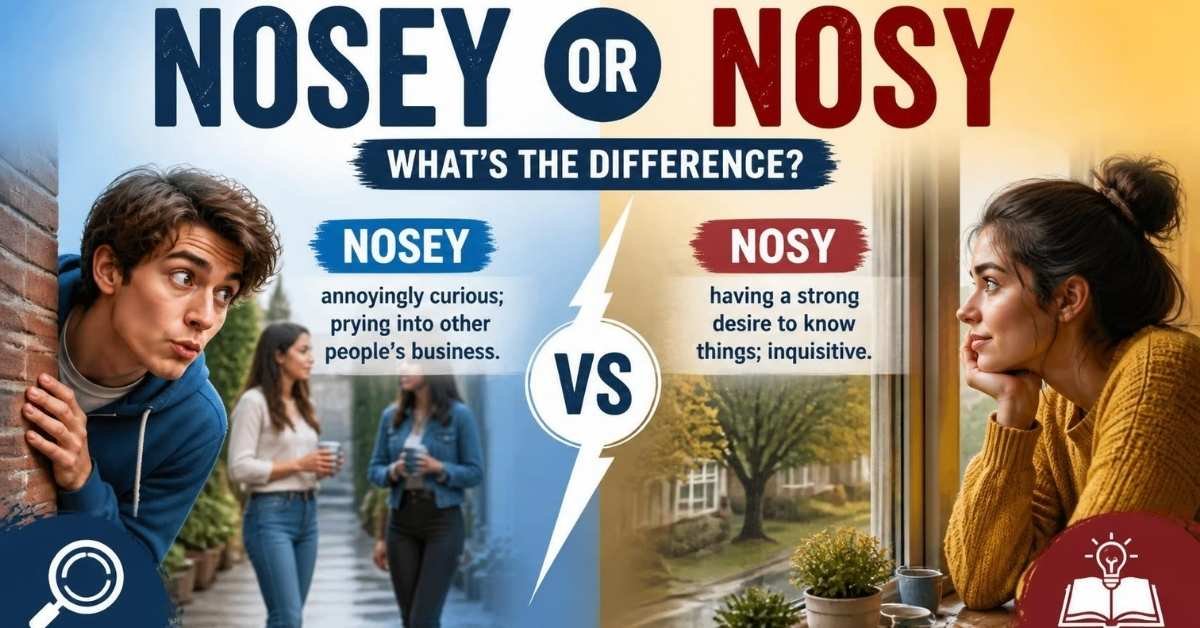
You typed a text to your friend. Then you paused. Is it “nosy neighbor” or “nosey neighbor”? That tiny pause has probably cost you a few seconds more than once.
You’re not alone here. This is one of those spelling confusion words that trips up even confident writers. Let’s clear it up for good, with real examples you’ll actually remember.
Nosey or Nosy – Quick Answer
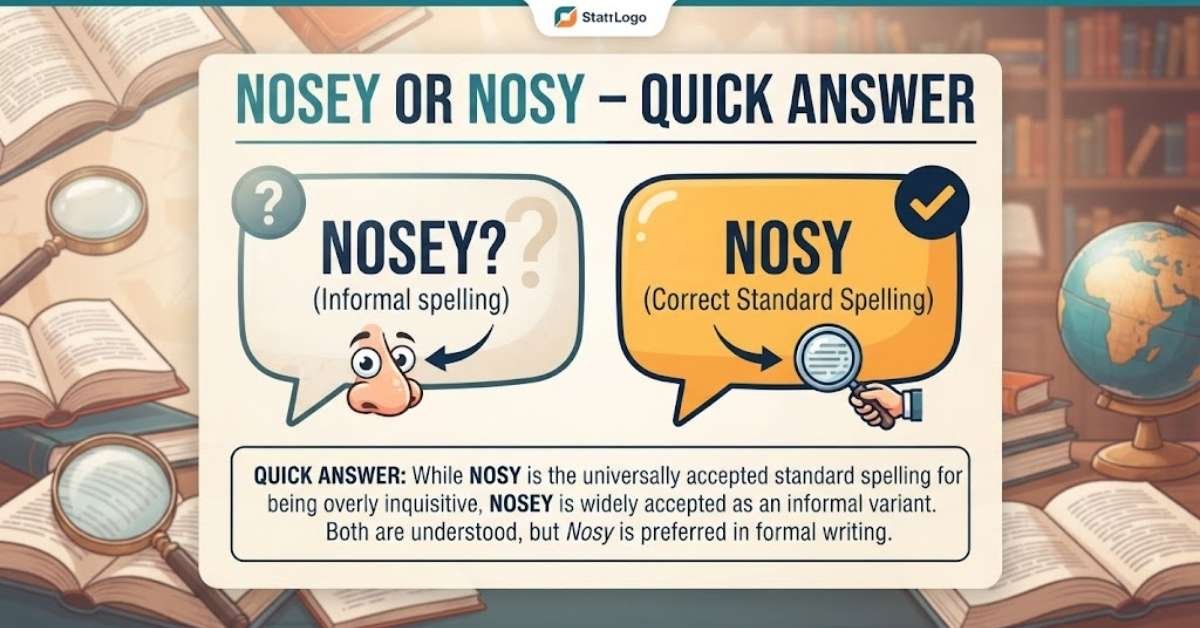
Nosy is the correct spelling in standard English, and it’s the version accepted almost everywhere, from American English to British English. Nosey isn’t wrong exactly, but it’s a much less common variant, and most dictionary sources like Cambridge Dictionary list “nosy” as the primary entry.
So if you’re writing an email, a school assignment, or a social media caption, go with “nosy.” It’s the safer bet, and it reads as more polished in formal writing and informal writing alike.
Quick tip: think of the word “nose” plus the letter “y.” Drop the “e,” and you land on the correct word form. That’s the whole trick, honestly.
The Origin of Nosey or Nosy
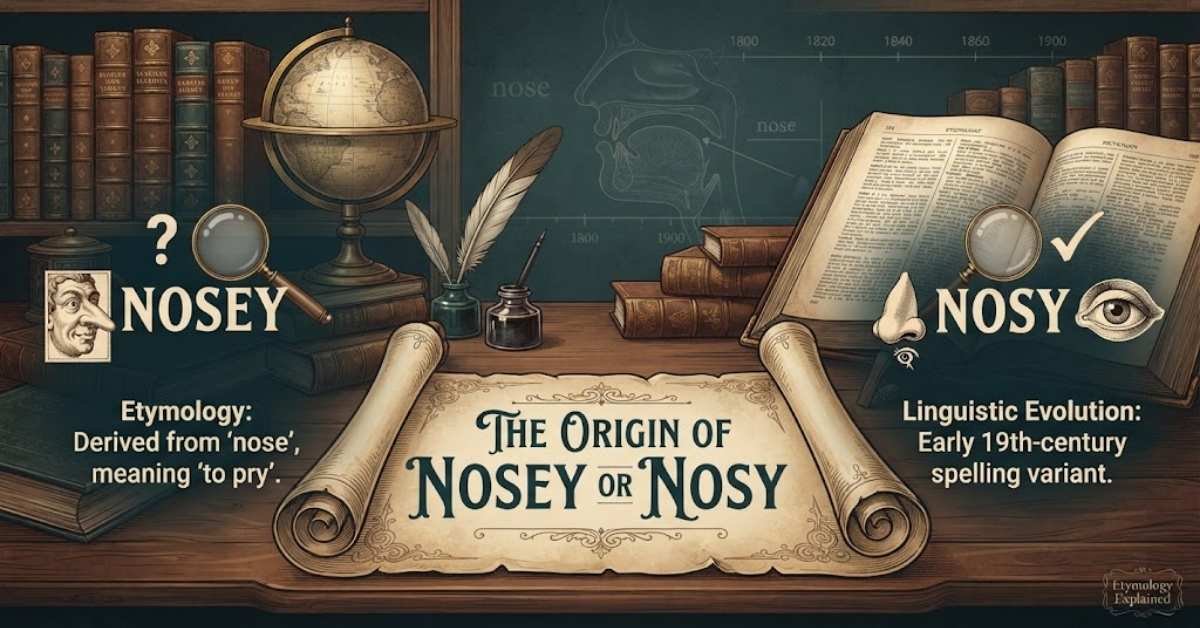
The word comes straight from nose, the body part, and it’s tied to the figurative meaning of poking your nose where it doesn’t belong. Think about it. When someone leans in too close to overhear a conversation, we say they’re “sniffing around.” Same idea, different phrasing.
Over time, English speakers started using “nosy” to describe excessive curiosity about other people’s affairs. The word origin isn’t glamorous, but it’s practical. Language often builds itself around body parts this way, and “nosy” is a textbook case of etymology doing its job.
By the time dictionaries standardized spelling in the 1800s, “nosy” had already won out as the accepted form. “Nosey” popped up here and there in older texts, but it never became the standard spelling. That’s just how English rolled the dice on this one.
British English vs American English Spelling
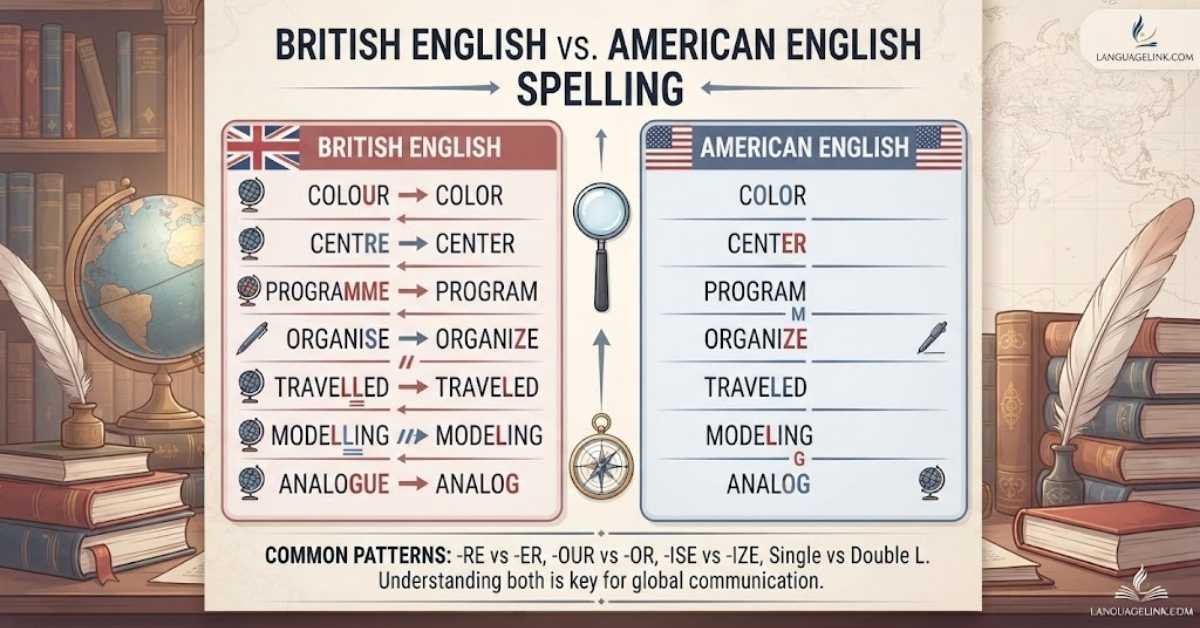
Here’s where people get genuinely confused. Usually, British English and American English disagree on spelling. Think “colour” versus “color,” or “realise” versus “realize.” So it’s fair to assume “nosy” follows the same pattern, right?
Wrong, actually. Both UK English and US English agree that “nosy” is correct. There’s no split here like you’d find with other English variants. “Nosey in British English” and “nosy in American English” both point to the same answer.
This makes the word a bit of an outlier among English language quirks. Most spelling debates have a clear UK side and a US side. This one doesn’t. Everyone’s rowing the same boat, which honestly makes your job easier.
Which Spelling Should You Use?
Use “nosy.” That’s the short version. If you want your writing to reflect writing accuracy and writing skills that hold up under scrutiny, “nosy” is the spelling that belongs in your toolkit.
That said, “nosey” isn’t going to get you laughed out of the room. Some older texts, casual blogs, and even a few dictionary entries list it as an acceptable variant. But if you’re aiming for professional writing, stick with the version everyone recognizes instantly.
Think of it like ordering coffee. You could ask for a “cortado” and get something fancy, or you could just say “coffee” and know exactly what you’re getting. “Nosy” is the plain, reliable order. “Nosey” is the specialty drink nobody quite agrees on.
Common Mistakes with Nosey or Nosy
The biggest spelling mistake people make is adding that extra “e” out of habit. It happens because of phonetic spelling instincts. Your brain hears the “oh” sound in “nose” and assumes the “e” needs to stay when you add the “y.”
Another common slip involves confusing “nosy” with “nosey” in school terms and academic settings. Students often lose points on common spelling errors like this one, especially in essays where grammar rules matter for grading.
Here’s a quick list of things to avoid:
- Don’t add an extra “e” before the “y” (nosey is the less accepted form)
- Don’t assume British spelling rules apply here, they don’t
- Don’t mix it up with “nose” as a verb when you mean the adjective
- Don’t rely purely on word pronunciation to guess spelling
Small habits like these build writing confidence over time, and catching them early saves you from repeat grammar mistakes.
Nosey or Nosy in Everyday Examples
Seeing a word in context always helps more than staring at a definition. Let’s walk through how “nosy” shows up across different types of everyday language, from casual chats to formal writing.
These sentence examples cover the situations you’ll actually run into. Whether you’re drafting a quick text or polishing a school essay, having real examples on hand makes the correct usage stick faster.
Emails / Messages
In email writing, you might write, “Sorry if this sounds nosy, but is everything okay?” This is a common softener people use in emails and messages to ask a personal question without sounding rude.
Texting a friend? Something like “Don’t mean to be nosy, who was that at your door?” works perfectly in casual text messages. It keeps the tone light while admitting you’re curious.
News / Articles
News articles often use “nosy” when describing public reactions or investigative behavior. A headline might read, “Nosy Neighbors Report Suspicious Activity to Police.” It’s a word that carries just enough personality for journalism.
You’ll also spot it in feature pieces about privacy, where writers discuss how technology has made unwanted curiosity easier than ever before.
Social Media
Social media captions love this word. Someone might post, “Being a nosy aunt is basically my full time job now.” It’s playful, relatable, and instantly understood by anyone scrolling past.
Comment sections are full of it too. “Not to be nosy but who is this?!” shows up under nearly every mystery photo post you’ll ever see.
Writing
In story writing and character description, authors use “nosy” to build personality fast. A single line like “She was the nosy type, always peeking through curtains” tells readers everything they need to know about that character.
Blog posts, articles, and essays all lean on this word when describing behavior without sounding harsh. It carries a slightly negative tone, but not a cruel one.
Nosy vs Curious: Is There a Real Difference?
People often treat “nosy” and “curious” as twins, but they’re not quite the same. Curiosity on its own is neutral, even admirable. Scientists are curious. Kids are curious. Nobody rolls their eyes at that.
“Nosy” adds an edge to it. It implies personal matters and private business are being pried into without invitation. That’s the difference between asking a good question and reading someone’s diary over their shoulder.
Knowing this distinction actually improves your communication skills. Calling someone “curious” is a compliment. Calling them “nosy” is a gentle jab, sometimes affectionate, sometimes not. Context decides which one lands.
How to Remember the Correct Spelling for Good
Here’s a trick that sticks. Picture a nosy neighbor peeking over a fence. The word “nose” is sitting right there in the middle of “nosy.” Drop the silent “e,” add the “y,” and you’re done.
Another memory hack involves rhyming it with “rosy.” Both words drop the “e” from their root and add “y” cleanly. If “rosy” doesn’t confuse you, “nosy” shouldn’t either.
This kind of pattern recognition helps with language learning in general, not just this one word. English rewards people who notice these small, repeatable rules instead of memorizing every word in isolation.
Nosey or Nosy – Google Trends & Usage Data
If you check Google Trends, “nosy” pulls in noticeably more search popularity than “nosey” across most regions. US searches and UK searches both favor “nosy” by a wide margin, and the gap has stayed fairly consistent over the past several years.
Interestingly, Canada searches and Australia searches show a similar pattern, reinforcing that this isn’t a regional divide at all. Language trends across English speaking countries point in one direction here, and it’s rare to see that kind of agreement on a spelling question.
This kind of usage data matters if you’re writing for search engines too. Since “nosy” dominates search trends, using it in your content naturally aligns with what readers are actually typing into the search bar.
Comparison Table – Nosey vs Nosy
| Feature | Nosy | Nosey |
| Correct spelling | Yes, widely accepted | Rare, informal variant |
| Dictionary spelling | Primary entry in most dictionaries | Sometimes listed, not preferred |
| American English | Standard usage | Uncommon |
| British English | Standard usage | Uncommon |
| Formal context | Recommended | Avoid |
| Informal context | Fully acceptable | Occasionally seen |
| Google Trends | Higher search volume | Lower search volume |
This comparison table makes the choice pretty obvious. Whenever you’re stuck between the two, “nosy” wins in nearly every column, and that consistency is exactly why it’s the safer default.
Why Getting This Spelling Right Actually Matters
You might think one letter doesn’t move the needle much. But attention to detail shapes how readers judge your credibility in writing, especially in professional writing where small errors stand out more than you’d expect.
Educational writing and writing workshops often flag this exact word because it’s such a common trap. Getting it right signals that you’ve put care into your work, which builds reader understanding and trust almost instantly.
Clean spelling also supports clear communication. Readers shouldn’t have to pause and wonder if you meant something else. Every fixed detail, even a tiny one like this, adds up to stronger written communication overall.
Conclusion
So, nosey or nosy? Go with nosy. It’s the version dictionaries prefer, search engines favor, and both American and British English agree on. “Nosey” isn’t a crime against grammar, but it’s the extra step you don’t need to take.
Next time you catch yourself hovering over that word, remember the nose, drop the “e,” and move on with your day. Small fixes like this build real writing confidence, one word at a time.Got a favorite nosy neighbor story or a spelling mix-up that still bugs you? Drop it in the comments below. Sharing these little wins helps everyone reading along too.
FAQs
Is “nosey” ever correct?
It shows up occasionally in casual writing and older texts, but “nosy” is the standard and preferred spelling across standard English conventions.
Do British and American English spell it differently?
No. Unlike many words, both English variants agree on “nosy” as the correct form, with no regional split.
What does “nosy” actually mean?
It describes someone showing unwanted curiosity about other people’s affairs, often in a way that feels intrusive or overly curious.
Is calling someone “nosy” rude?
It carries a negative tone, but it’s usually said lightly among friends or family rather than as a genuine insult.
How can I remember the correct spelling?
Picture the word “nose” plus “y,” and skip the extra “e.” Rhyming it with “rosy” also helps it stick.
Can “nosy” be used in formal writing?
Yes, it’s accepted in both formal writing and informal writing, making it flexible enough for essays, articles, and everyday conversation.