You typed a sentence, then froze. Was it sown or sewn? You’re not alone here.These two words sound almost identical when spoken out loud. But they mean completely different things once you look closer.
One belongs in a garden or a wheat field. The other belongs in a tailor’s shop, next to a needle and thread.Mixing them up is one of the most common spelling confusion issues in English today, even among people who write for a living. So let’s clear this up once and for all.
Sown
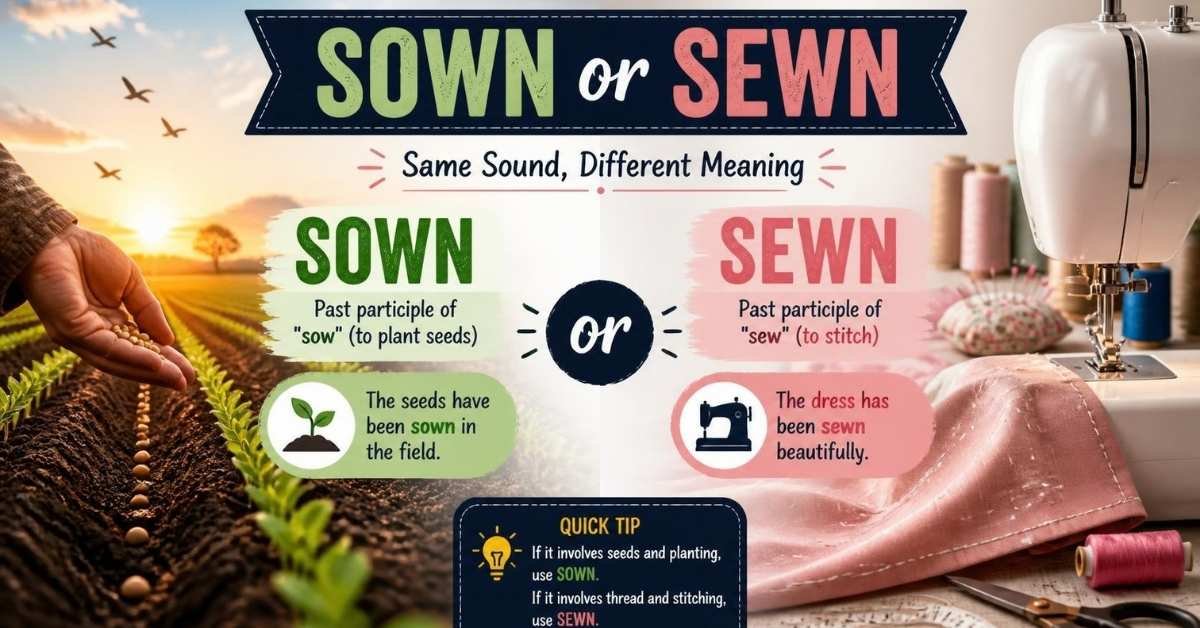
Sown is the past participle of the verb sow, which means to plant seeds. Think farmers, gardens, and crops.
Sewn
Sewn is the past participle of the verb sew, which means to stitch cloth using a needle. Think tailors, fabric, and clothing.
Sown or Sewn: Quick Answer ✅
Here’s the short version, because you probably want it fast.
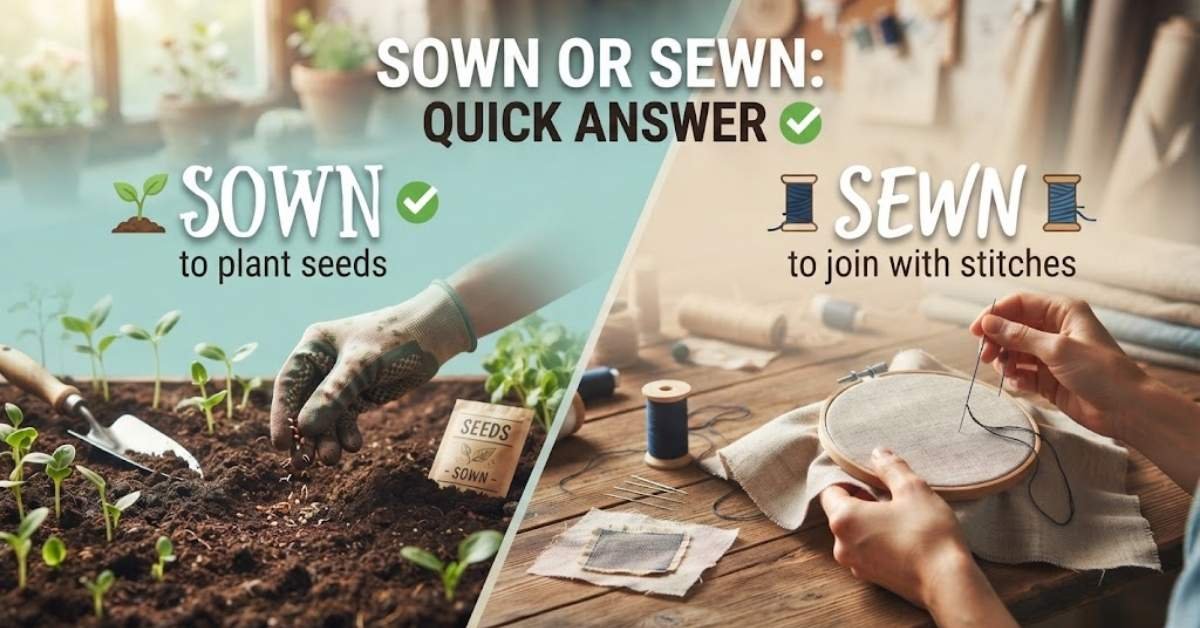
If you’re talking about planting seeds in soil, use sown. If you’re talking about stitching fabric together, use sewn.
That’s really the whole difference in one line. Everything else in this guide just builds on that idea.
✔ Main Difference:
- Sown relates to agriculture, farming, and gardening.
- Sewn relates to sewing, tailoring, and garments.
- Both are past participles, but of two completely different verb base forms.
📌 Examples:
- The wheat was sown early this spring.
- Her dress was handsewn by a local tailor.
- Farmers have sown rice across the whole field.
- He got the torn bag repair done, and it was neatly sewn.
Sown or Sewn: Definitions with Examples 📖
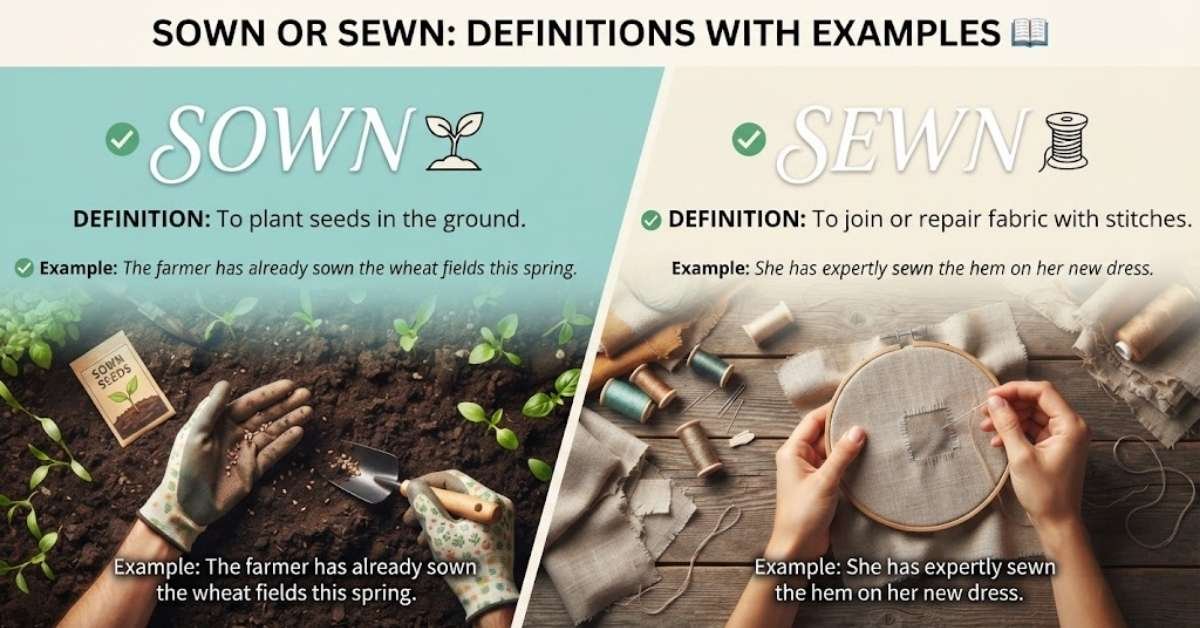
Knowing the dictionary meaning helps, but seeing them in real sentences helps even more. So let’s break both words down properly.
Context is everything with these two. Once you spot the subject of the sentence, be it soil or cloth, the correct word becomes obvious.
🟢 Sown (Definition)
Sown describes seeds that have already been placed into the ground to grow. It’s tied directly to planting, growing crops, and the whole harvest cycle.
You’ll hear it a lot during spring planting or the rainy season, when farmers talk about their fields.
📌 Examples:
- The seeds were sown just before the monsoon arrived.
- Grandpa always said the best wheat comes from soil sown in cool weather.
- Flower bulbs were sown along the garden fence last week.
🔵 Sewn (Definition)
Sewn describes cloth, buttons, or fabric pieces that have been joined together using needle and thread. It belongs to the world of fashion, textile work, and tailoring.
Whether it’s a shirt, curtains, or a costume, if a needle touched it, sewn is your word.
📌 Examples:
- The buttons were sewn back onto his shirt in minutes.
- This dress is entirely handsewn, no machines involved.
- The curtains were sewn using thick cotton fabric.
🟡 Simple Meaning
Still confused? Here’s the easiest way to remember it: soil gets sown, cloth gets sewn. One rhymes with “grown,” the other rhymes with “shown” but stitches things instead.
The Origin of Sown or Sewn 📜
Honestly, this is where the confusion actually starts. Both words come from Old English, but from two totally separate roots.
Knowing the etymology behind them makes the difference click almost instantly, and it’s a fun bit of language origin trivia to drop at dinner too.
Sown:
Sown traces back to the Old English verb sāwan, which simply meant “to scatter seed.” Over centuries, English speakers shortened and reshaped it, but the core farming meaning never changed.
Sewn:
Sewn comes from a different Old English root, siwian, meaning “to stitch” or “to fasten with thread.” This word has stayed close to sewing and textile work since it first appeared.
Why confusion happens:
The two words developed along parallel paths but ended up sounding nearly the same in modern speech. Add in similar spelling patterns, and you get a recipe for constant mix ups, especially for English learners.
British English vs American English Usage
Here’s something a lot of guides skip. Does British English and American English treat these words any differently? Not really, but there are small usage habits worth knowing.
Both UK usage and US usage keep the same correct spelling and meaning for sown and sewn. The difference shows up more in tone and frequency, not definition.
📌 Key Point:
British writers use sown slightly more often in literary and poetic contexts, thanks to a long history of farming references in literature. American writers lean toward sewn more in casual, everyday clothing talk.
📊 Comparison Table:
| Feature | Sown | Sewn |
| Meaning | Planting seeds | Stitching fabric |
| Root Verb | Sow | Sew |
| Old English Origin | sāwan | siwian |
| Common Field | Agriculture, gardening | Fashion, tailoring |
| British Usage | Common in rural, literary writing | Common in fashion writing |
| American Usage | Used in farming context | Frequently used in DIY, crafts |
Which Spelling Should You Use? 🎯
This is the part everyone actually wants answered. So here’s your simple decision guide, no overthinking required.
Ask yourself one question first: am I talking about a field or a shirt? That single question solves nine out of ten mix ups instantly.
✔ Use “Sown” When:
- Talking about seeds, crops, or planting
- Describing a farmer’s work in the field or garden
- Writing about agriculture, spring planting, or harvest season
✔ Use “Sewn” When:
- Talking about needle and thread work
- Describing hand-sewn products or repaired garments
- Writing about fashion, tailoring, or sewing projects
🧠 Memory Trick (Easy)
Picture a farmer tossing seeds into soil, that’s sown. Now picture a tailor pulling thread through fabric, that’s sewn. Attach a mental picture to each word, and you’ll never mix them up again.
Common Mistakes with Sown or Sewn ❌⚠️
Even confident writers slip up here. Let’s look at the exact mistakes people make so you can spot them in your own writing too.
These errors show up everywhere, from school essays to professional emails, and they’re surprisingly easy to fix once you know what to look for.
1. Using Sewn for Farming
Some writers accidentally write “the seeds were sewn” when they mean sown. This flips the whole meaning, turning a farming sentence into something about stitching, which makes no sense.
2. Using Sown for Stitching
The reverse mistake happens too. Writing “the dress was sown” instead of sewn confuses readers, since dresses get stitched, not planted in soil.
3. Thinking They Are Interchangeable
These are not interchangeable words, despite sounding alike. Treating them as synonyms is one of the fastest ways to lose credibility in formal writing.
4. Spelling Confusion
Because the pronunciation is so close, autocorrect tools sometimes swap one for the other without you noticing. Always proofread sentences with these words twice before hitting publish.
Sown or Sewn in Everyday Examples 💬
Real life examples help these words stick far better than dry definitions ever could. Let’s walk through where you’ll actually run into them.
From casual chats to formal reports, both words show up more often than you’d think, just in very different settings.
🏠 Daily Life
At home, you might hear someone say the tomato seeds were sown in pots on the balcony. Meanwhile, a torn pillow cover gets sewn back together in the same afternoon.
📱 Social Media
Gardening influencers post captions like “seeds sown, fingers crossed for a good harvest.” Fashion creators, on the other hand, showcase hand-sewn designs with pride in every reel.
📚 School Writing
Students studying agriculture write essays about crops being sown across different seasonal planting cycles. Meanwhile, home economics classes teach hand stitching and how garments get sewn.
💼 Professional Writing
In formal writing, agricultural reports discuss how much wheat or rice has been sown this year. Fashion industry documents describe textile work, detailing how each piece was sewn and finished.
Sown or Sewn: Usage Trends & Popularity 📊
Word popularity shifts with culture, and these two are no exception. Search data and everyday conversation both show interesting patterns worth knowing about heading into 2026.
Understanding these trends helps writers, students, and even marketers choose the right word for the right audience.
📌 Trend Insight:
Sewn tends to trend higher during DIY and fashion design seasons, especially around back to school and holiday crafting periods. Sown spikes during spring planting months when gardening terms dominate searches.
📌 Key Insight:
Content creators covering handmade clothing, repairing fabric, or sewing terminology consistently outperform generic posts because they use precise, topic specific vocabulary improvement language rather than vague terms.
Sown vs Sewn: Quick Reference for Writers ✍️
Writers juggling multiple topics in one week genuinely benefit from a fast lookup table. This section exists purely to save you time when deadlines are tight.
Bookmark this part if you write regularly about farming terms or clothing terms, since it condenses everything into one glance.
- Sown: seeds, soil, crops, fields, gardens, harvest.
- Sewn: needle, thread, fabric, clothes, tailoring, repair.
- Both are irregular past participles, not standard “-ed” endings.
- Neither word changes meaning between British English and American English.
Comparison Table 📋
| Aspect | Sown | Sewn |
| Verb Base | Sow | Sew |
| Category | Agriculture, farming | Textile, tailoring |
| Related Words | Seeds, soil, crops | Fabric, thread, garments |
| Common Setting | Fields, gardens | Workshops, homes |
| Example Sentence | Wheat was sown last week | The shirt was sewn by hand |
Common User Queries 🔍
People searching this topic usually want quick, direct answers, not long theory lessons. Here are the exact questions readers type into search bars most often.
Many of these overlap with everyday confusion, which is exactly why a clear, well organized guide like this one earns trust and repeat visits.
- Is it “the crops were sown” or “the crops were sewn”?
- Does “sewn” ever apply to plants?
- Which spelling fits a wedding dress description?
- Are sown and sewn pronounced the same way?
- What’s the correct past participle of sew?
Conclusion
At the end of the day, this comes down to one simple rule. Sown belongs to soil and seeds, sewn belongs to needles and fabric.Once that picture is locked into your head, the word choice becomes automatic. No more pausing mid sentence wondering which spelling fits.
Keep this guide handy the next time doubt creeps in, whether you’re writing about crops, clothing, or anything in between.
FAQs ❓
1. Are sown and sewn the same?
No, they are not the same. Sown relates to planting seeds, while sewn relates to stitching fabric with a needle and thread.
2. What does sown mean?
Sown means seeds have been planted in soil, usually connected to farming, gardening, or crop production.
3. What does sewn mean?
Sewn means fabric or cloth has been stitched together, commonly used in tailoring, fashion, and clothing repair.
4. Can I use them interchangeably?
No, swapping these words changes the meaning of your sentence completely and can confuse readers or come across as a correct spelling error.
5. Which one is used in farming?
Sown is the correct word for farming, referring to seeds placed into soil during spring planting or the rainy season.
6. Which one is used in clothing?
Sewn is correct for clothing, describing anything stitched by hand or machine, from a simple shirt to a full costume.
7. Easy way to remember?
Picture soil for sown and thread for sewn. That single mental image solves the confusion almost every single time.