You toss a banana peel and an old newspaper in the same bin without a second thought. But someone tells you the peel is “garbage” and the newspaper is “trash,” and suddenly you’re second-guessing a word you’ve used your whole life.
That mix-up is more common than you’d think. The truth about trash vs garbage comes down to one small but useful distinction: what the waste is actually made of.
Quick Answer
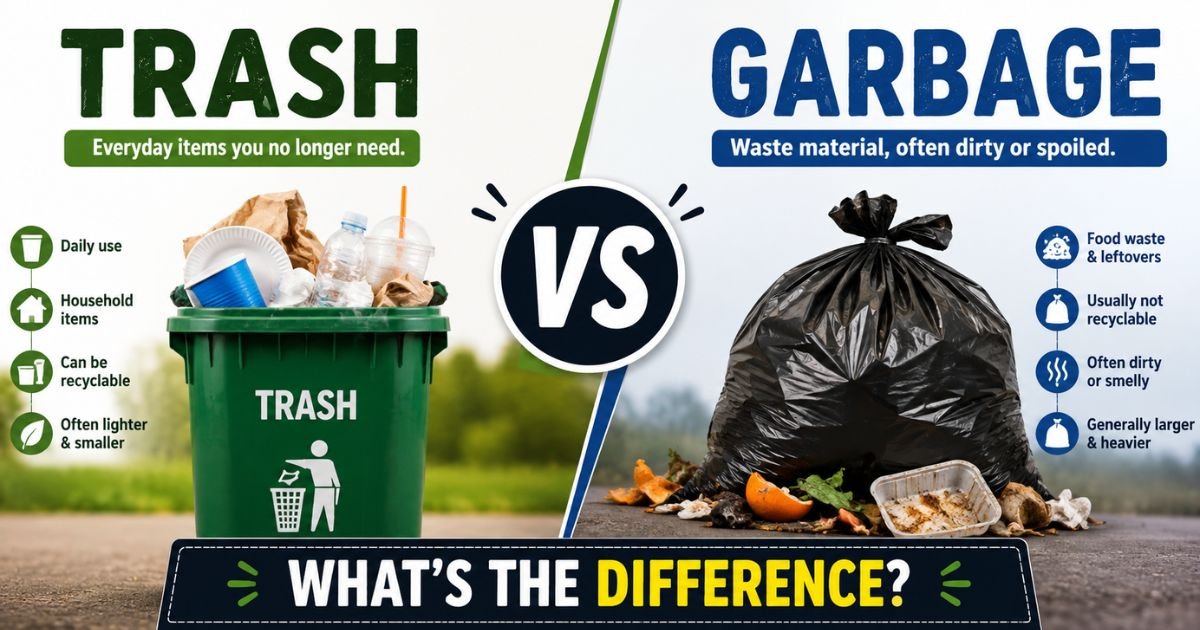
Trash usually means dry waste like paper, packaging, or old clothes. Garbage usually means wet or food-related waste that can rot or smell. In everyday American speech, people often use both words the same way, but the technical difference is dry versus wet waste.
What Does “Trash” Mean?
Trash refers to solid waste that doesn’t spoil or rot quickly. Think cardboard boxes, plastic wrappers, broken toys, or worn-out shoes. It’s the stuff that sits in a bin without creating a smell or attracting pests overnight.
The word also shows up outside of waste management. You’ll hear “trash talk” in sports, “trashy” as slang for low quality, or someone calling gossip “trash.” That flexibility is part of why trash feels like the more casual, everyday word.
What Does “Garbage” Mean?
Garbage leans toward wet, organic, or food-based waste. Vegetable peels, leftover meat, spoiled dairy, and coffee grounds all fall under this label. Because this type of waste decomposes, it tends to smell faster and needs more frequent disposal.
Garbage also carries a figurative meaning, similar to trash. Calling an idea “garbage” means it’s worthless or poorly thought out. In technical and municipal contexts, though, garbage almost always points specifically to organic, biodegradable waste.
Trash vs Garbage: The Core Difference
The clearest way to separate these two words is by moisture and decomposition:
- Trash = dry waste (paper, plastic, glass, metal, fabric)
- Garbage = wet or organic waste (food scraps, spoiled produce, biodegradable material)
This distinction matters most in waste management, where separating dry and wet waste affects how it’s collected, processed, or recycled. Municipal sanitation departments often base pickup schedules on this exact split, since organic waste needs faster disposal than dry waste does.
Are Trash and Garbage the Same Thing?
In casual conversation, yes, most people treat them as the same thing. If your neighbor says “take out the trash” or “take out the garbage,” they mean the same task: get the waste out of the house.
But in formal or technical settings, like city sanitation codes or environmental science, the words describe different categories of waste. So the honest answer is: same idea in daily speech, different meaning in official or technical use.
Trash vs Garbage in American English vs British English
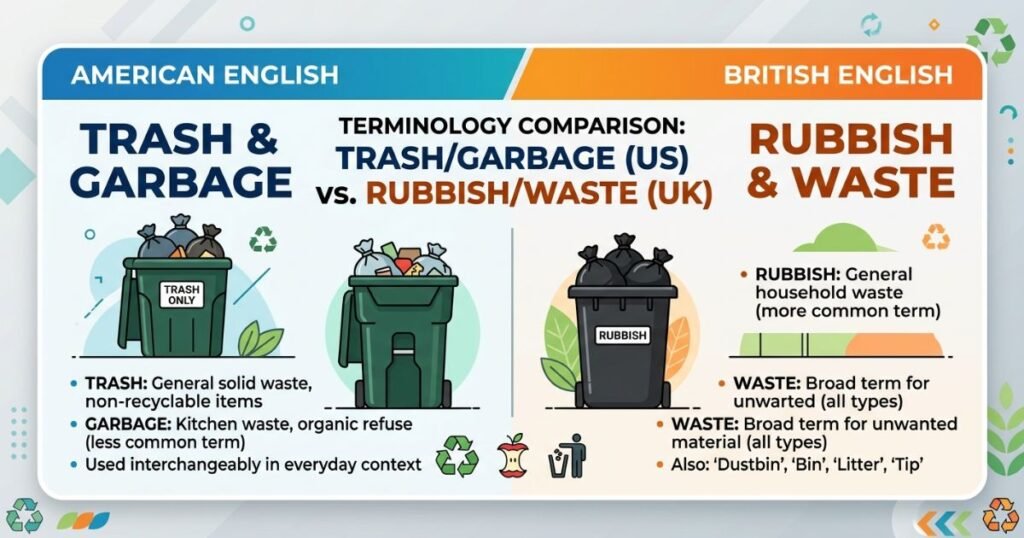
Regional word choice plays a big role here too.
- American English speakers use both trash and garbage regularly, often interchangeably.
- British English speakers rarely use either word for household waste. They say rubbish instead. “Garbage” and “trash” sound distinctly American to a British ear.
If you’re writing for a UK audience, “rubbish” is the natural choice. For US readers, either trash or garbage works, though trash tends to sound slightly more common in casual speech.
Trash Can vs Garbage Bin: Is There a Difference?
Not really, in terms of function. Both refer to a container for holding waste before disposal. The difference is regional habit and container size:
| Term | Common Usage |
| Trash can | Common across the US for household or office bins |
| Garbage bin | Common for larger outdoor containers, especially for curbside pickup |
| Garbage can | Used interchangeably with trash can in many US regions |
| Wastebasket | Smaller indoor container, often for paper waste |
There’s no strict rule here. Word choice often depends on where you grew up more than what’s technically correct.
Real-Life Examples of Trash and Garbage in Sentences
Seeing the words in context makes the distinction click faster.
Trash examples:
- “Can you take the trash cans to the curb before the truck comes?”
- “She threw the old receipts in the trash.”
- “That movie review was total trash, according to my friend.”
Garbage examples:
- “The garbage started smelling because I forgot to take it out.”
- “Put the garbage disposal on before you run more food scraps down the sink.”
- “He called the whole business plan garbage.”
Notice how garbage shows up more often with food and smell, while trash covers general clutter and dry items.
What Happens After You Throw It Out?
Once waste leaves your bin, it usually follows one of these paths:
- Landfill – Most mixed trash and garbage ends up here if it isn’t sorted.
- Recycling facility – Dry trash like paper, cardboard, glass, and certain plastics gets sorted and reprocessed.
- Composting facility – Organic garbage, especially food scraps and yard waste, can be composted instead of landfilled.
- Incineration – Some cities burn non-recyclable waste to generate energy, though this varies by region.
Understanding where your waste goes is part of why the trash vs garbage distinction still matters, especially for households trying to recycle or compost correctly.
Types of Household Waste You’re Probably Sorting Already
Most homes generate a mix of these categories, whether or not they’re labeled:
- Dry trash: paper, cardboard, plastic packaging, glass bottles
- Wet garbage: food scraps, spoiled leftovers, coffee grounds
- Recyclables: clean plastic, aluminum cans, certain glass
- Compostables: fruit and vegetable waste, eggshells, yard trimmings
- Hazardous waste: batteries, paint, electronics (these need separate disposal)
If your city has a composting or recycling program, knowing which bin gets which type of waste saves you from contamination fines and wasted effort.
Common Mistakes People Make With Trash and Garbage
A few habits trip people up more than you’d expect:
Mixing wet and dry waste in recycling. Food residue on cardboard or containers can contaminate an entire batch of recyclables.
Assuming garbage only means food waste. While it usually leans that way, garbage is sometimes used loosely for any household waste, especially in casual speech.
Using “trash” and “garbage” as if they’re always interchangeable in professional writing. In waste management reports or environmental documents, mixing them up can create confusion about what’s actually being discussed.
Forgetting regional differences. Using “garbage” with a British audience might read as oddly American, even though it’s perfectly correct.
Quick Summary Table
| Feature | Trash | Garbage |
| Waste type | Dry waste | Wet or organic waste |
| Common examples | Paper, plastic, fabric | Food scraps, spoiled produce |
| Smell risk | Low | Higher, due to decomposition |
| Regional usage | Common in US | Common in US, rare in UK |
| Figurative meaning | Low quality, worthless | Low quality, worthless |
| British equivalent | Rubbish | Rubbish |
Frequently Asked Questions
Are trash and garbage the same?
In everyday conversation, most people use them the same way. Technically, trash refers to dry waste and garbage refers to wet or organic waste, but this distinction rarely matters outside formal or municipal contexts.
What is the main difference between trash and garbage?
The main difference is moisture and decomposition. Trash is dry and doesn’t rot, like paper or plastic. Garbage is wet or organic and breaks down over time, like food scraps.
Is garbage only food waste?
Not strictly, but it leans that way. Garbage most often refers to food-related or organic waste, though people sometimes use it loosely for any household waste in casual speech.
What word is used in British English?
British English speakers typically say rubbish instead of trash or garbage. Both American terms are understood in the UK but sound noticeably American.
Can I use trash and garbage interchangeably?
Yes, in daily conversation you can use either word without causing confusion. Save the technical distinction for situations like waste sorting, recycling programs, or environmental writing where precision matters.
Conclusion
The words trash and garbage overlap so much in daily use that most people never think twice about swapping them. But knowing the real difference, dry waste versus wet or organic waste, helps in situations where precision actually counts, like sorting recyclables or understanding how your city handles waste. Next time you toss something out, you might notice which bin it really belongs in.