
Ever typed “programs” in an email and then wondered if your UK client would frown at it? Or stared at “programmes” in a BBC headline and thought it was a typo?You’re not alone. English spelling trips up students, writers, and English learners every single day, and this pair is a classic.
Here’s the short version before we dig in. Both spellings are correct, but American English uses program for everything, while British English uses programme for most things except computing.
Quick Answer
Use programs if you write for a US audience. Use programmes if you write for a UK audience about TV programmes, educational programmes, events, or plans.
The one big exception is software. In the United Kingdom (UK), a computer program is spelled “program”, just like in the United States (US).
Not sure who’s reading? Pick one style and stay with it. Writing consistency matters more than which side you choose.
The Origin of Programs or Programmes

The word origin goes back to the Greek word programma. It meant a written plan or a public notice, something posted for everyone to read.
Then the French language influence kicked in. English borrowed the French form “programme”, and it stuck as the standard British spelling.
Later, the American simplified spelling movement trimmed the ending down to “program”. The same thing happened with “catalogue” and “catalog”, so you’re seeing a pattern, not a random quirk. If you like etymology, the Cambridge Dictionary and other reference sites explain the history well.
British English vs American English Spelling
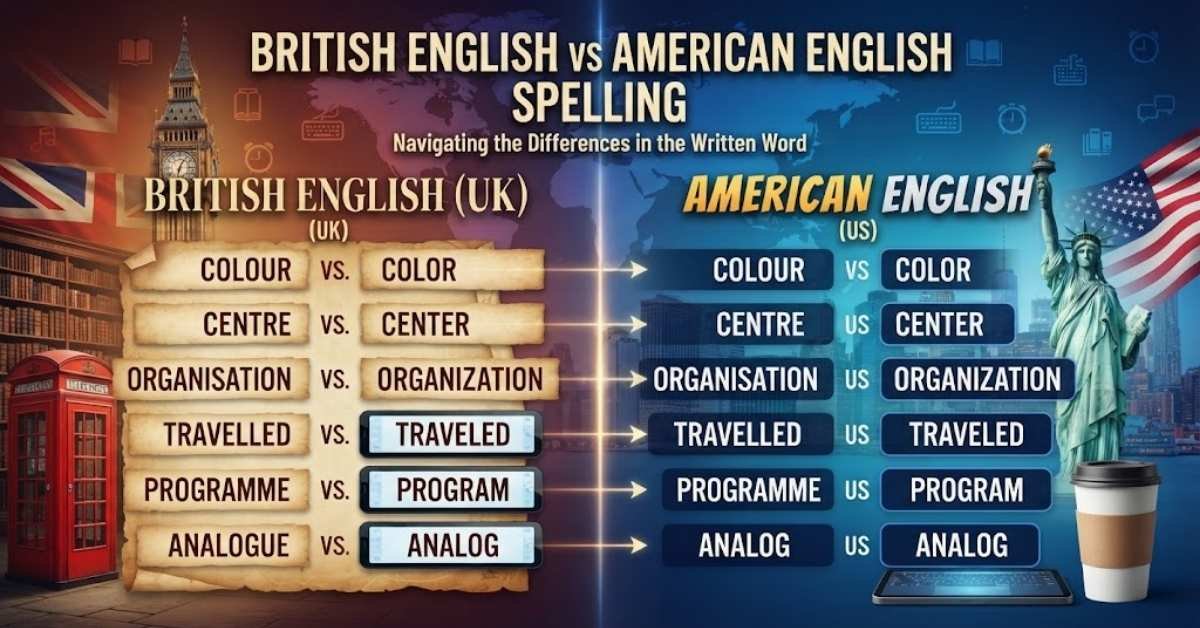
Think of this as a British vs American spelling comparison with a simple rule. The UK spelling rules keep the longer French ending, and the US spelling rules cut it short.
Spelling differences like this show up in many words:
- Programme (UK) and program (US)
- Centre (UK) and center (US)
- Colour (UK) and color (US)
This is regional spelling, not right versus wrong. Both are valid language standards. They just belong to different places, which is why British vocabulary and American vocabulary sometimes feel like two cousins who grew up in different houses.
Which Spelling Should You Use?

Start with your reader. If most of your audience lives in the United States (US), choose “program”. If they live in the United Kingdom (UK) or most Commonwealth countries, choose “programme” for non technical uses.
Then think about global English. If you run a website for readers all over the world, pick the version your main market uses and stick with it.
Here’s a simple guide:
- US audience: program in every context
- UK audience: programme for TV, courses, and events, program for software
- Mixed audience: choose one and keep it consistent
Computing: Why Program Wins Everywhere

In computing, “program” is the standard on both sides of the Atlantic. Computer programs, software programs, and security software all use the shorter spelling.
Why? Early computer science was heavily shaped by American research, and the shorter form spread across the global technical context. British engineers adopted it too, which is why you’ll rarely see “programme installation” in a UK tech manual.
So if you write about software development, software installation, or a security program, use “program”. A computer technology blog in London will do the same.
Common Mistakes with Programs or Programmes
Most errors come from mixing styles or assuming one spelling fits every situation. A quick check before you hit publish saves you from looking careless.
Let’s break down the mistakes and the fixes.
Frequent Errors
These slip-ups show up again and again in professional writing, reports, and emails:
- Using “programme” for a computer program in UK writing
- Mixing “program” and “programmes” in the same document
- Writing “programm” or “programmme” by accident
- Changing the spelling in an official name, like a government scheme
That last one hurts. Document consistency shows a reader you care about details.
Correct Approach
Decide your audience first, then choose a style guide. Once you pick, run a quick search for the other spelling before you send anything.
For UK spelling rules, use “programme” outside tech. For US spelling rules, use “program” everywhere. And if the name of an official scheme uses a specific spelling, copy it exactly.
Programs or Programmes in Everyday Examples
Let’s make this real with some sentence examples. Read them out loud and notice how each one feels natural.
- “The IT team installed the new security program on every laptop.” (US and UK)
- “Did you catch that wildlife programme on BBC last night?” (UK)
- “She signed up for a training program at her company.” (US)
- “The university launched a new academic programme in data science.” (UK)
These are real-life examples you’d see in news articles, social media posts, and emails. Imagine you’re sending a meeting note to a colleague in Manchester. You’d write “Our employee training programmes start next week,” and it would look perfectly normal to them.
Programs or Programmes – Google Trends & Usage Data
Want to see how people search these terms? Google Trends lets you compare “programs” and “programmes” by country and time, and the pattern is easy to spot.
Expect “programs” to show higher search volume worldwide. That makes sense, because the United States (US) has a huge online population and “program” covers software, computing, and general use.
“Programmes” tends to perform better in the United Kingdom (UK) and other Commonwealth countries. Rather than trusting a number from a random blog, open Google Trends, add both terms, and filter by region to see global searches in your own market. It takes about a minute, and the data stays fresh.
Comparison Table: Programs vs Programmes
A quick grammar comparison helps everything click. Here’s how the two spellings stack up.
| Feature | Program | Programme |
| Main region | United States, also global in tech | United Kingdom, Commonwealth countries |
| Computing use | Yes, worldwide | No |
| TV shows | US style | UK style |
| Educational courses | US style | UK style |
| Plural form | programs | programmes |
| Spelling type | American simplified | British standard |
Save this table if you switch between clients in different countries. It works like a small cheat sheet for usage tips you’ll use again and again.
Training Programs or Programmes
When you talk about training programs at a US company, you use the short spelling. Corporate programs, employee training programs, and professional development plans all follow the same rule.
In the UK, you’d write training programmes or professional training programmes. A training schedule might list an onboarding programme, a leadership programme, and a safety refresher.
Picture an HR manager writing to staff in two offices, one in Chicago and one in Leeds. She could write “employee training program” for the first and “employee training programme” for the second, or pick one style for both. Either way, she stays consistent inside each message.
Educational Program or Programme
In American schools, you’ll see educational programs and online educational program listings. Universities, schools, and institutes in the US use the short version for learning programs and online learning options.
In the UK and many Commonwealth countries, the same offering becomes an educational programme. You’ll spot academic programmes on prospectuses, while institutions in Australia and other regions may follow their own house style.
For academic papers and academic writing, match the spelling of the country you’re writing for. A UK thesis on educational courses should say “programme”, and a US paper should say “program”.
TV Program or Programme
This is where the difference shows up the most. In the US, you’d say TV program. In the UK, you’d say TV programme.
BBC and other UK broadcasters use “programme” for television, documentary series, and broadcast programmes. So an award winning TV programme or a wildlife programme looks natural on a British site.
For media and media content aimed at global viewers, choose one style and stick with it. If your channel serves both the UK and US, consider using “show” in titles to sidestep the whole debate.
Programs or Programmes in Canada, Australia and Beyond
Not every English speaking country follows the UK or US pattern strictly. Canada mostly leans toward “program”, while Australia uses a mix that often favors “program”, especially in general and tech writing.
Countries such as Ireland, India, and South Africa frequently follow British English for non technical uses. Still, style guides at individual organizations can differ, so always check the local house rules.
This is what International English looks like in real life. If you write for global English readers, a quick look at your target audience’s habits saves you a lot of cleanup later.
Quick Memory Tricks for Writers and Students
Here’s a trick that works for many language learners. Think “programme” has more letters because Britain likes to keep things fancy, and “program” is short because America likes speed.
You can also link the spelling to the setting:
- Screen and code: program
- Stage and screen shows in the UK: programme
- Not sure: check the audience first
Another handy tip is to set your word processor to British English or American English before you start. It flags the other spelling instantly and helps you keep consistent spelling style across long documents.
Conclusion
So, programs or programmes? Both are right, depending on where your readers live and what you’re describing. Use “program” for computing everywhere, and choose “programme” only for UK style TV programmes, courses, and events.The real win is writing consistency. Pick your style, apply it across your business writing, technical writing, and social media posts, and you’ll look polished every time.
Now it’s your turn. Which spelling do you use most, and has it ever caused a mix up? Drop your thoughts in the comments, and share this with a friend who keeps asking about British vs American spelling.
FAQs
Is “programme” correct in American English?
It’s understood, but US writers rarely use it. American English prefers “program” for every meaning.
Do British people use “program” for software?
Yes. In the United Kingdom (UK), computer programs and software programs use the shorter spelling.
What is the plural of program and programme?
The plurals are programs and programmes. Just add an “s” to whichever singular form you choose.
Which spelling does the BBC use?
The BBC uses “programme” for TV and radio content. For computing topics, it switches to “program”.
Can I mix both spellings in one article?
It’s best not to. Mixing them signals sloppy professional writing, so keep one style for the whole piece.